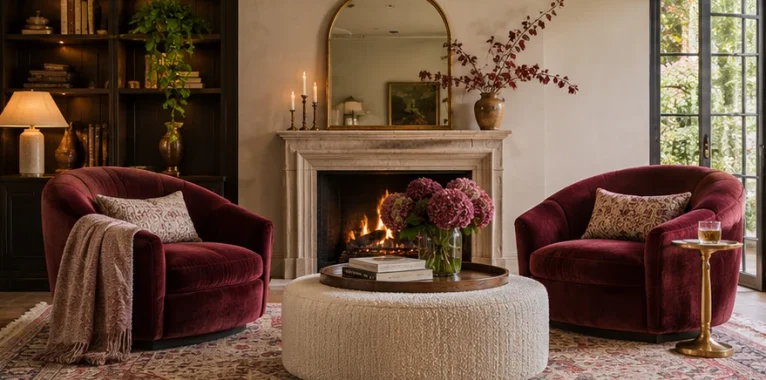
20 Living Room Artwork Ideas
A blank wall above the sofa can make the whole living room feel like it’s waiting for someone to move in. But scroll through enough wall art online and suddenly you’re debating frame finishes for a picture you don’t even love. Sound familiar? Start with the mood you want when you walk into the room, then pick the art that gets you there.
These 20 living room artwork ideas cover everything from one oversized landscape to a gallery wall you can build slowly. You’ll find options for colorful rooms, neutral sofas, and awkward little corners. Grab a tape measure if you have one handy. We’ll get to the hanging tips after the fun part.
Landscape artwork for a calmer living room
Want a room that feels a little more relaxed as soon as you step inside? Look for soft edges, open skies, and colors that feel comfortable next to your furniture. A landscape gives your eye somewhere to wander, which is especially welcome when the view outside is somebody else’s brick wall.
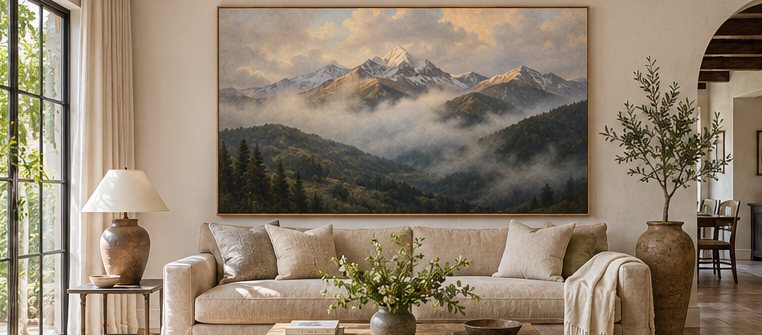
1. Hang an oversized mountain landscape
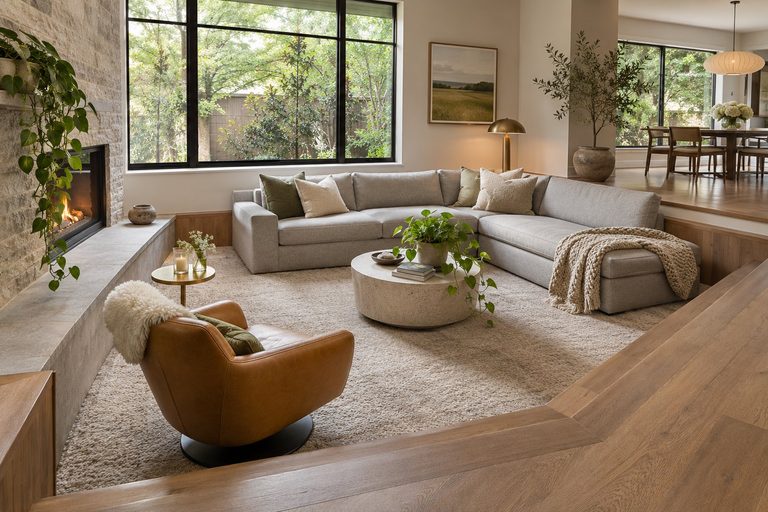
Pick a wide mountain print with layers of misty green or blue. Hang it above a cream sofa, where the soft palette can carry the wall without overpowering the upholstery. A slim oak frame works nicely with pale furniture. For a moodier look, try a walnut frame and repeat its finish in a side table.
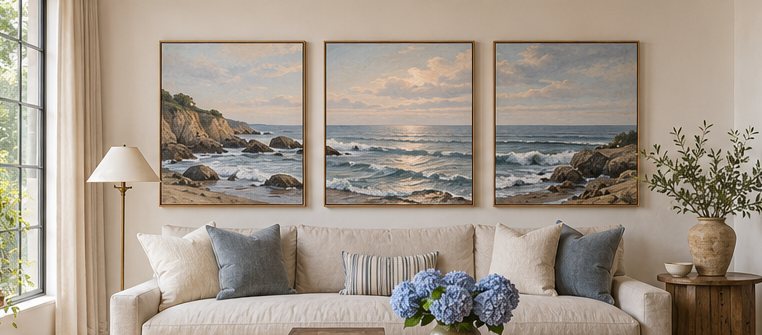
2. Break a coastal scene into three panels
A coastal triptych spreads one view across three frames. Choose panels with a horizon that lines up, then hang them with equal gaps so the water reads as one continuous scene. If your sofa is extra long, measure the width of all three panels together before ordering.
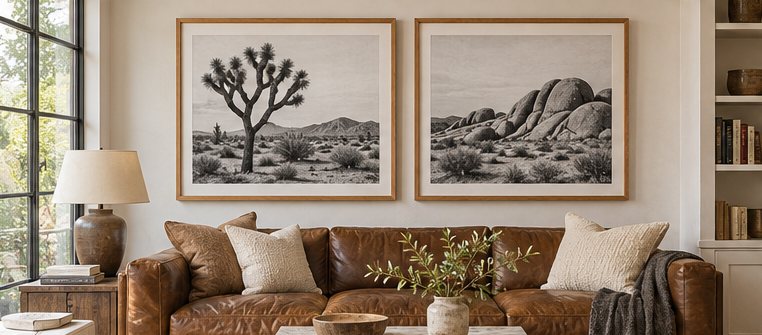
3. Pair two black-and-white landscape photos
Try two desert photographs with similar light and a shared subject, such as dunes with strong shadows. Matching mats give the images equal weight, even when one feels busier than the other. Love the look but want something more personal? Use two photos from the same trip and convert them to black and white together.
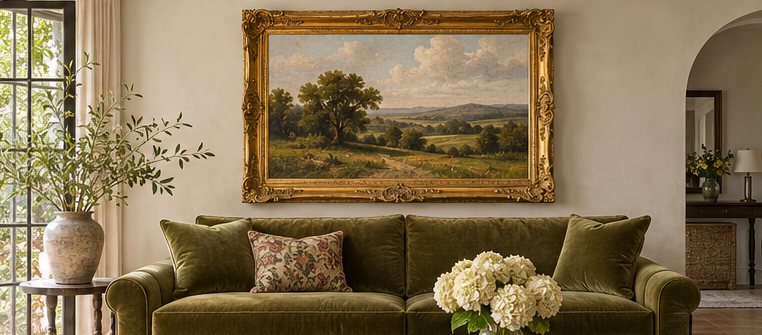
4. Frame a vintage countryside painting
An old field scene in a worn gold frame brings warmth to a room with olive velvet, leather, or dark wood. Hunt for a secondhand oil painting or frame a reproduction in a thrifted frame. A slightly faded sky and a few rusty tones can pick up the colors in your rug beautifully.
5. Try a quiet abstract landscape
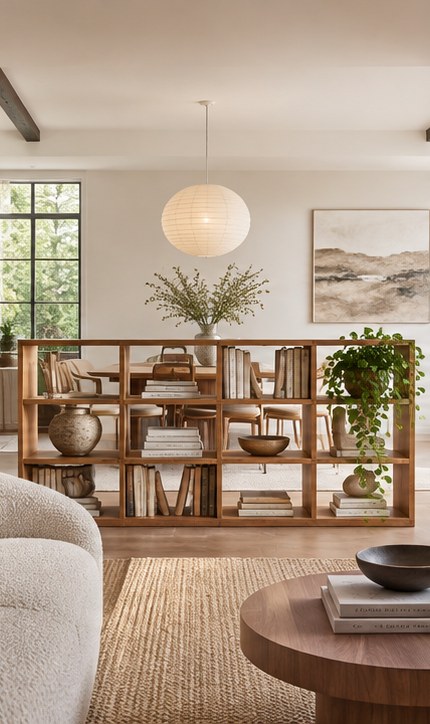
Look for broad bands of paint that suggest land and sky. A hazy wash of blue over ochre can bring the calm of a landscape into a room full of clean lines. Pick one color from the painting and repeat it in a throw or small vase.
Statement wall art and gallery wall ideas
Some living rooms need one clear focal point. Others come alive when a few smaller pieces sit together. From the doorway, look at the wall you notice first and imagine whether one big shape or a group of frames would suit it.
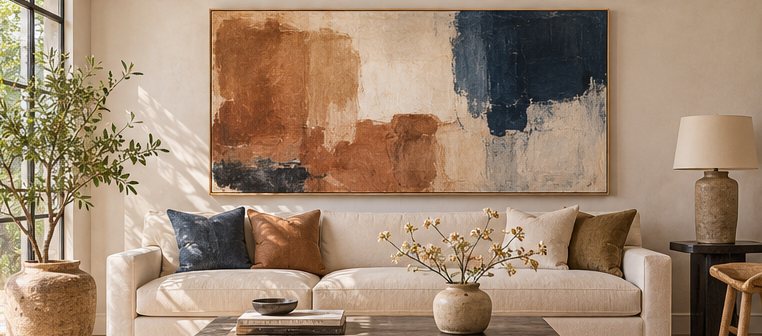
6. Choose a bold abstract canvas
A clay-and-indigo canvas can give a beige sofa more presence. Look for a large area of quiet color and a stronger accent you can spot across the room. IMO, this is one of the easiest ways to bring in a color you love without buying another piece of upholstered furniture.
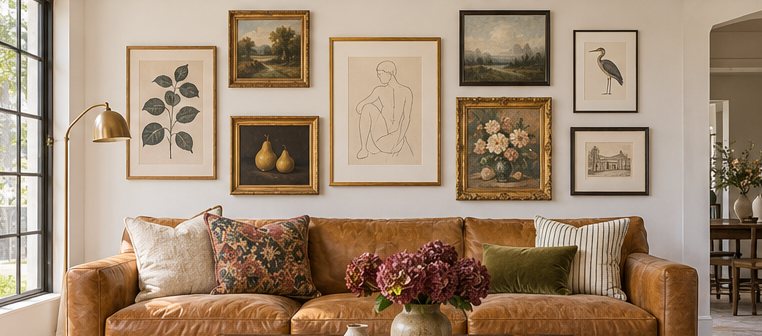
7. Build an asymmetric gallery wall
Place the largest piece slightly off-center, then build outward with smaller prints and photographs. Repeat a frame finish or a color at least twice to give the arrangement some rhythm. Try the layout on the floor first and snap a photo once it feels balanced.
8. Hang six matching frames in a grid
A two-by-three grid works well over a sofa or long console. Try six sketches of buildings, plant studies, or illustrations from one series in matching frames. Mark both rows with painter’s tape before hanging. A small difference in spacing becomes surprisingly obvious once all six frames go up.
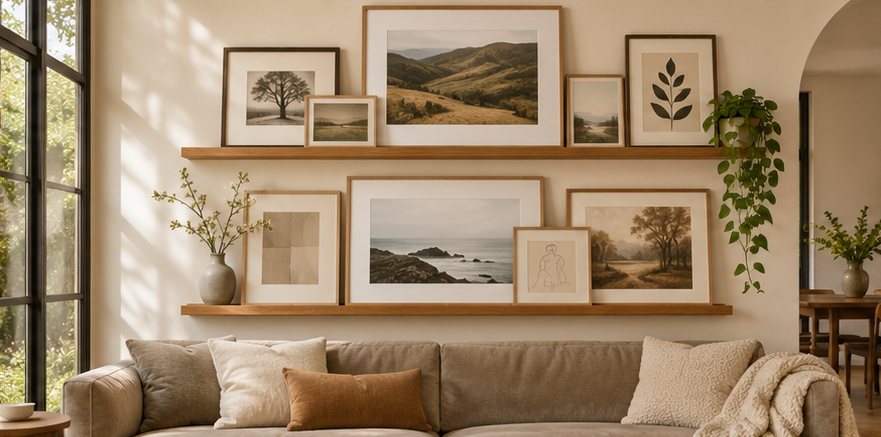
9. Lean artwork on picture ledges
Mount shallow ledges and layer a couple of small frames in front of a taller print. Keep the overlaps modest so you can still see the main image in each frame. Want an easy seasonal change? Swap out one piece and let the rest of the display anchor it.
10. Give a vintage poster its own spot
A reproduction travel poster can make a dark corner feel cheerful, especially if it has a strong block of warm color. Hang it above a low cabinet or beside a reading chair. A plain frame gives the lettering and illustration room to stand out.
Textured and botanical living room artwork
Too many glossy frames can start to feel formal, especially around a sleek TV and glass coffee table. Look for fibers, wood grain, or the fine details of a botanical print. Those surfaces catch the light differently and give your living room more depth.
11. Hang a woven textile
A woven wall hanging with a generous fringe brings softness to a space with bare floors and crisp furniture. Choose a piece wide enough to hold its own above the sofa. Cream yarn and a little ochre can warm up a sage wall or couch without introducing a busy pattern.
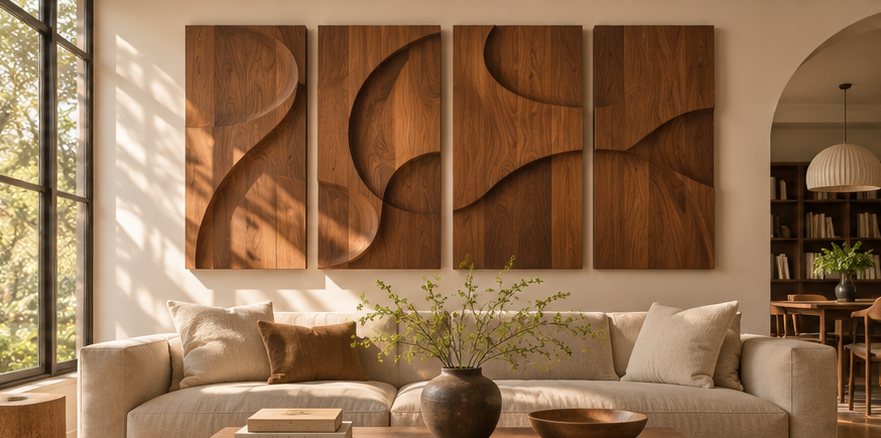
12. Mount sculptural wood panels
Carved or slatted panels cast shadows that shift as the daylight moves. Choose warm walnut for a pale room or a lighter oak when the wall color is deep. Leave a stretch of bare wall around the panels so you can see the outline and texture from across the room.
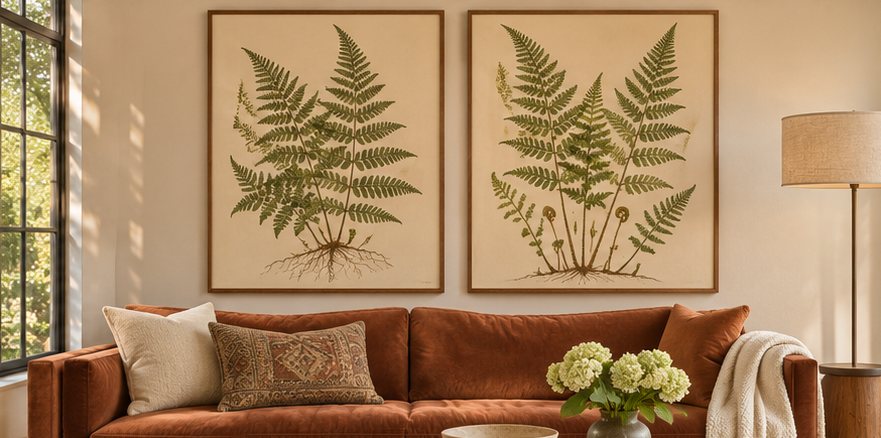
13. Display a pair of botanical prints
Two large fern illustrations in simple frames look especially good against a warm white wall. Choose prints with similar proportions, such as two tall stems with generous margins. If your living room already has plenty of plants, muted prints can echo the greenery without adding another focal point.
14. Frame a piece of fabric
Do you have a scarf you love but rarely wear? A frame can bring its pattern into the room every day. Look for a frame with enough depth to hold the fabric comfortably, and choose a backing that picks up a quieter color from the design.
15. Make a pressed-leaf display
Press leaves flat and arrange them with the stems facing the same direction. Three specimens can look lovely in a single frame with a wide mat. Hang the piece away from direct sunlight, where the colors are less likely to fade quickly.
Personal and budget-friendly living room art
16. Enlarge a favorite family photo
Choose a candid shot with a little space around the people and have it printed with a matte finish. A tiny photo can get lost above a large sofa, so save smaller frames for a sideboard. Check the print resolution before paying for a large enlargement.
17. Frame a map with a story
Pick a map of your hometown, a memorable road trip, or the neighborhood where you first lived together. Look for a copy with enough detail to reward a closer look. Hang it somewhere guests can walk up to it, such as beside a bookcase.
18. Hang a few small ceramics together
Group three different ceramic pieces near a console, keeping at least one color or finish in common. Arrange them on paper first so you can tweak the gaps. Use wall hangers rated for each piece’s weight and appropriate to the wall.
19. Put a sketch in a generous mat
A thrifted frame with a wide mat can make a little pencil drawing feel right at home beside a reading chair. Give the drawing enough room around its edges so the lines stay visible. Then hang it where you can enjoy the details from nearby.
20. Display postcards in one frame
Pick a few postcards from a trip and arrange them into a neat row with visible borders. Three cards with a shared color make an easy grouping. If you like seeing the handwritten backs, use copies for the wall and keep the originals together.
How to hang living room artwork
A few measurements can save you from buying a piece that looks right online but feels tiny on the wall. FYI, treat these measurements as starting points and check the view from where you usually sit.
- Above a sofa Start with art about two-thirds as wide as the sofa and try a gap of 6 to 8 inches above the back.
- On an open wall Try a center height of 57 to 60 inches from the floor.
- For a gallery wall Start with 2 to 3 inches between frames and adjust for wider moldings.
- Before drilling Tape paper cutouts on the wall and take a look from the doorway and sofa.
Pick one wall and start there
A wide landscape brings a sense of calm, a gallery wall gives favorite pieces a place to live, and a woven hanging adds warmth. Choose the idea that feels most at home in your space and try it with a paper outline. If you catch yourself staring at that outline and picturing the finished room, you’ve probably found your spot.