20 Dark Academia Living Room Ideas
Picture the room you’d choose for reading on a rainy afternoon. There’s a pool of light beside the sofa, a rug that feels good underfoot, and a shelf full of books you actually want to open. These 20 dark academia living room ideas show how to get that cozy, old-library look with deep paint colors, inviting furniture, and secondhand finds. You can start with a single corner and build from there.
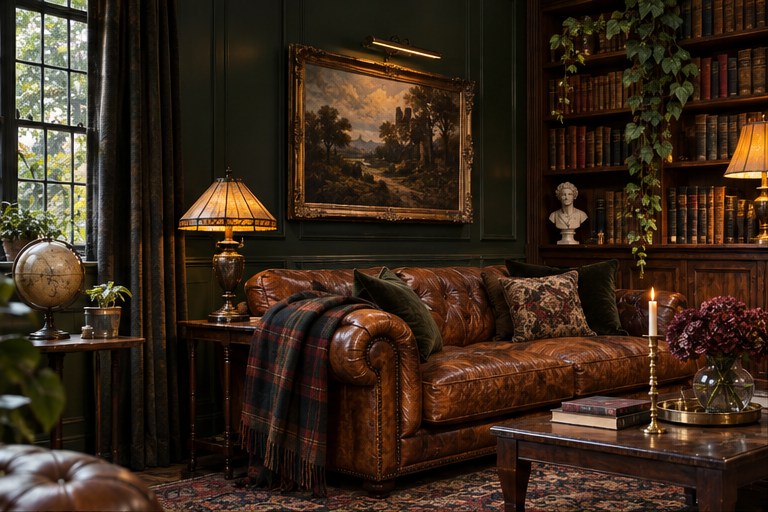
Rich Paint Colors for a Dark Academia Living Room
1. Pair Forest Green With Worn Leather Forest green looks especially good beside a cognac sofa because the warm leather brings out the color’s depth. Try a cool pine green if your floors lean orange, or an earthier green beside gray-brown wood. Paint two sample boards and move them behind the sofa at different times of day. Which green still looks inviting when you switch on the lamps?
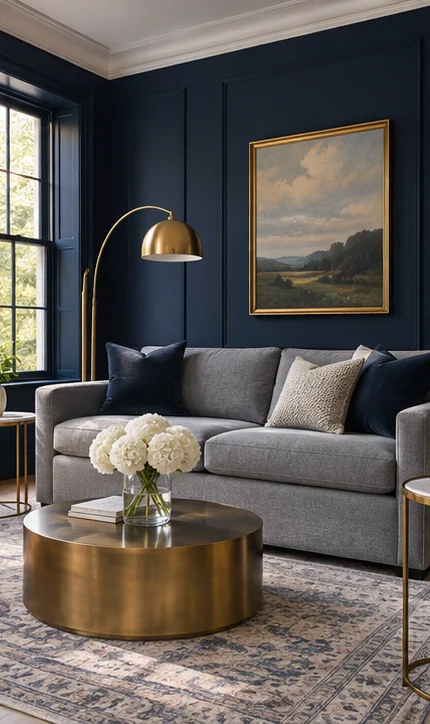
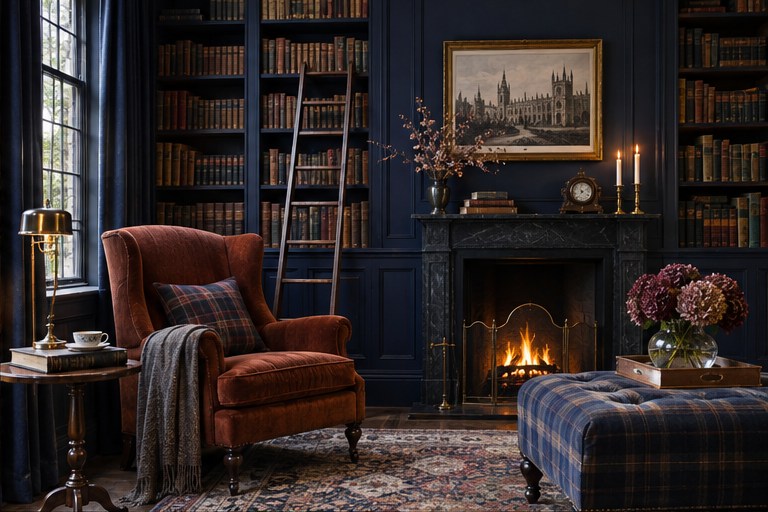
2. Go Ink Blue for an Old-Library Look If you want a dark academia living room in blue, start with a muted navy that reminds you of fountain pen ink. Pair it with a rust chair or reddish wood to warm up the palette. A navy fireplace surround and matching bookcases can make the whole wall feel intentional. Hang an architectural print where a lamp or picture light can pick out the details.
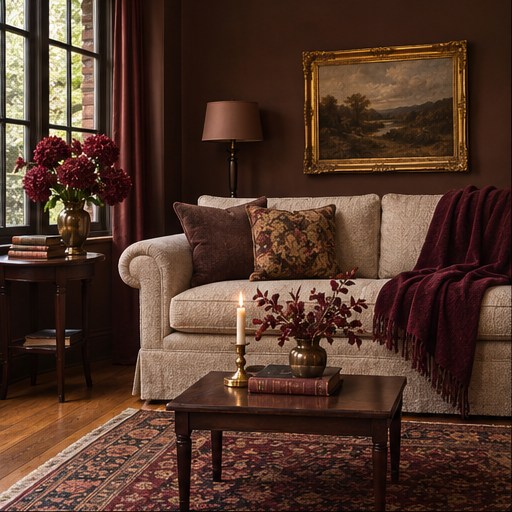
3. Use Cocoa Brown Where You Want Warmth Chocolate walls and a pale oatmeal sofa make a good match in a room that gets cool daylight. Add a burgundy cushion or a dark red rug to bring in a little color. FYI, a cream swatch can turn noticeably yellow against brown paint, so compare the two together. Keep the samples up until you’ve checked them after sunset.
4. Paint the Trim to Match Try the same color on the walls, baseboards, and window trim for the enveloping feel of an old study. To help the molding catch the light, choose a slightly shinier finish for the trim. You can carry the color onto the ceiling if you want the room to feel even more intimate. Start with the trim around one window to see the effect.
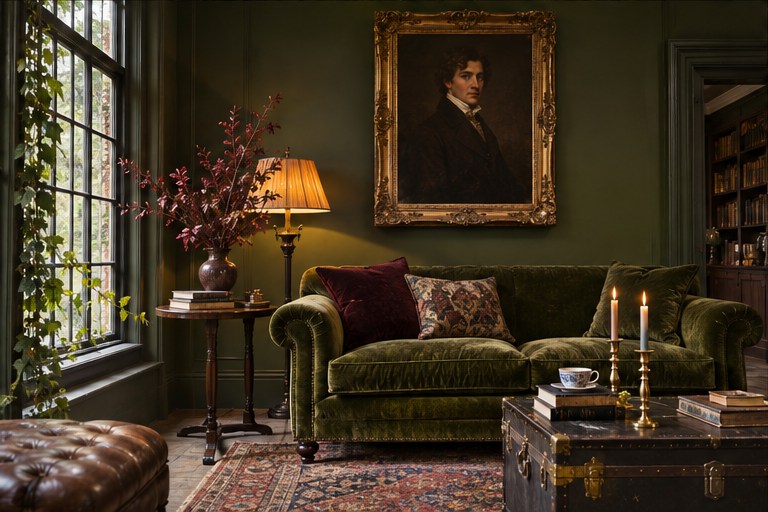
5. Start With an Olive Green Sofa Looking for dark academia living room ideas with green accents? An olive velvet sofa makes a strong enough statement to carry the palette even with neutral walls. Add a gilded portrait above it and a plum cushion for a little contrast. If you’re keeping your current sofa, try an olive velvet footstool and repeat the color in a small framed print.
Vintage Furniture and Textiles
6. Shop for a Leather Sofa With Character Look for supple leather, a sturdy frame, and seats deep enough for the way you sit. Rub marks and color variation can add character, especially on arms that catch the light. Sit down and stand back up when you try a secondhand sofa. You’ll learn quickly whether those well-loved cushions are comfortable enough for a whole evening.
7. Give a Velvet Armchair Its Own Corner An olive or oxblood armchair can make an empty corner feel like a destination. Angle the chair so you can see both the window and the sofa. Set a lamp slightly behind your shoulder and put a table within reach. Would you sit there with a book tonight? If the spot still feels awkward, move the chair before you buy anything else.
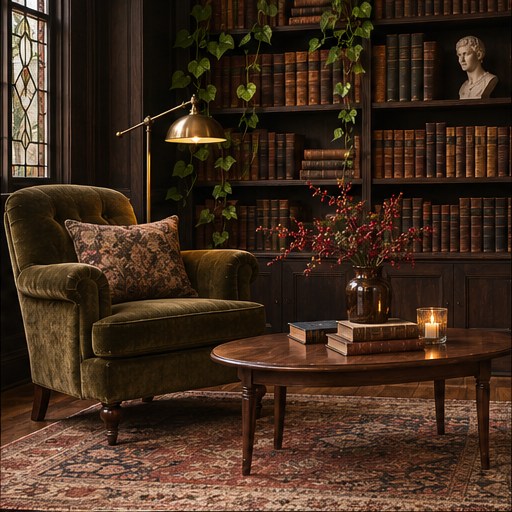
8. Center the Seating Around Walnut A walnut coffee table brings out the warm tones in leather, brass, and red textiles. An oval shape also makes it easier to move through a narrow seating area. Mark the table’s footprint on the floor before you order. Leave room for your knees and check that you can still reach a mug from the sofa.
9. Let a Faded Rug Guide the Colors A faded Persian-style rug can give you a color palette for the whole room. Pick one quiet shade from its border and repeat it in a throw or lampshade. A rug with muted red and gold will warm up ink-blue walls, while a little dusty blue looks good next to brown leather. Aim to get the front legs of your seating on the rug.
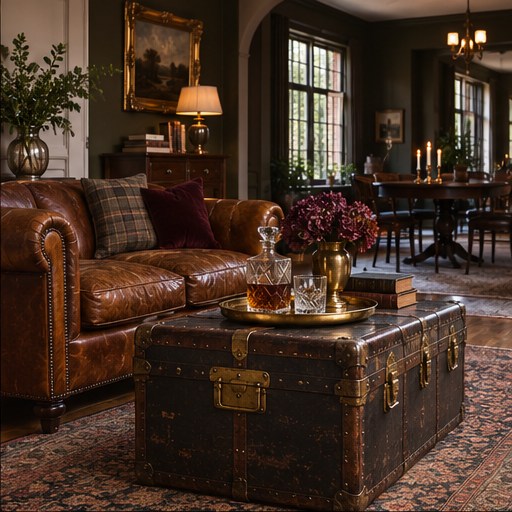
10. Turn an Old Trunk Into a Side Table A vintage trunk can hold spare blankets and give you a place to put a cup. Look for a flat lid and a height close to the sofa arm. Check that the lid opens easily when the trunk is in position. A brass tray keeps small items together so you can lift them off in one go.
Make Room for Books and Art
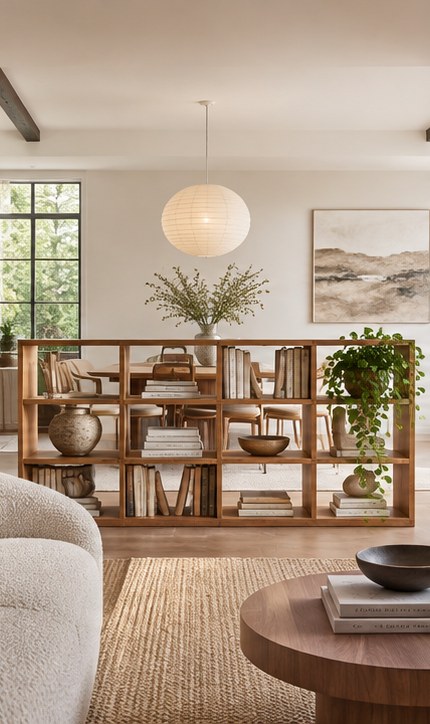
11. Create a Bookcase Wall Place matching bookcases side by side and paint them to blend with the wall. Follow the manufacturer’s instructions for securing tall furniture, and put the heaviest books down low. Keep one shelf partly open so you can prop up a favorite print. A lamp nearby will make the books feel like part of the seating area in the evening.
12. Style the Shelves Around Your Reading Habits Give the books you reach for most the easiest shelf to access. Stand the rest upright in loose groups and lay a few sturdy volumes flat where you need a surface for a bowl or framed photo. Try turning one favorite book face out. What cover would you like to see every time you pass the shelf?
13. Build a Gallery Wall With Thrifted Frames Mix dark wood and aged gold frames to give a blank wall some character. A portrait, a botanical drawing, and a small landscape can work together when they share a color. Lay everything out on the floor and take a photo before you hang it. You can also tape paper outlines to the wall to judge the spacing from the sofa.
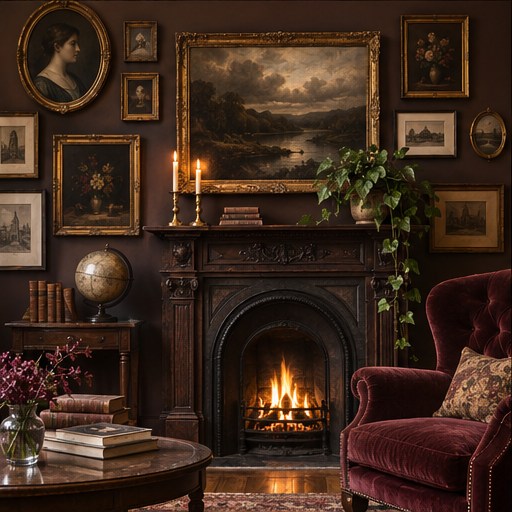
14. Give the Mantel One Strong Focal Point An old landscape over the fireplace gives your eyes somewhere to land as soon as you enter. Choose artwork that fills enough of the wall to feel connected to the mantel below. Pick up a color from the painting in a cushion or rug. A small vase at one end is enough if the painting already has plenty of detail.
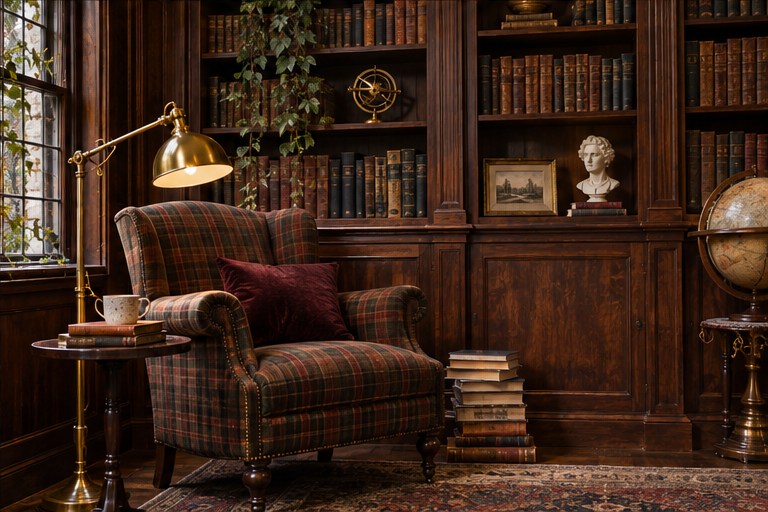
15. Set Up a Reading Nook You’ll Use Put your favorite chair where there’s natural light during the day and a lamp within easy reach at night. A plaid chair works particularly well with dark wood bookshelves and a brass reading lamp. IMO, the best finishing touch is a table big enough for your book and your tea. Keep the book you’re reading right where you’ll see it.
Layer Warm Light and Finish the Room
16. Give Every Lamp a Job Dark walls look different when light comes from several heights. Start with warm white bulbs around 2700 K and switch on each lamp separately to see what it does. Can you read comfortably on a cloudy afternoon, and can you turn down the glow once the book is closed? Try these three positions.
- Table lamp next to the sofa for a pool of light at seat height.
- Floor lamp behind a chair for light on the page.
- Picture light above one painting or bookcase for a soft evening accent.
17. Let Curtains Frame the Whole Window Full-length curtains make a small window feel more substantial. Extend the rod past the window frame so the panels can sit clear of the glass when you open them. Try warm cream linen if you want daylight to soften a dark wall. For more privacy and a heavier drape, look at lined velvet in a shade close to your paint.
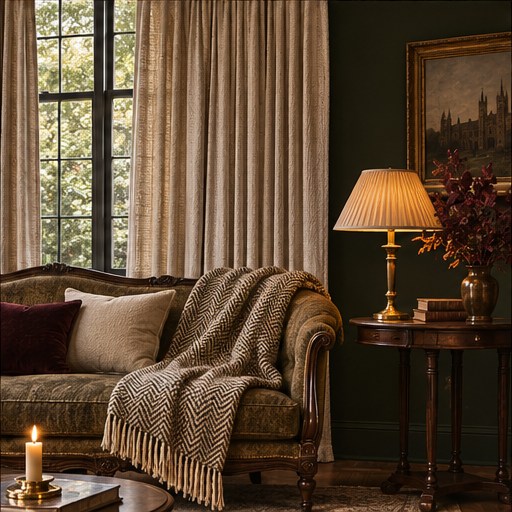
18. Bring In Plaid or Herringbone A single wool throw can give a plain chair the feel of a college library. Pick a pattern with one color your room already has, such as olive or tobacco brown. Against a busy rug, choose a fine herringbone or a small plaid. Fold the throw over the chair back so the pattern shows without covering the upholstery.
19. Use Brass Where the Room Catches Light A brass candlestick, lamp base, or picture frame picks up the glow of a nearby bulb. Put one piece toward the front of a dark shelf so you can see it from across the room. Look for aged brass if you like a softer finish. A polished tray is another option if you want a brighter accent beside matte wood.
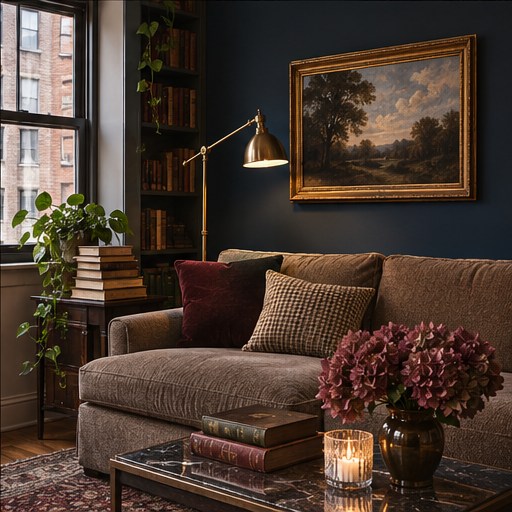
20. Give a Small Living Room One Moody Wall Paint the wall you see first from the doorway in a deep blue or green. Hang one generously sized piece of art and place a warm lamp close enough to light the wall. A taupe sofa helps keep the seating area visually open. Add a narrow stack of books on the side table and call the corner done.
Start With the Seat You Like Best
Deep paint, warm lighting, and well-chosen vintage pieces are enough to make a living room feel like your own private library. Start where you already spend time. Try a darker paint swatch behind your chair or move a lamp beside the sofa tonight. If you end up reading one more chapter instead of reaching for the remote, you’ve found your starting point.