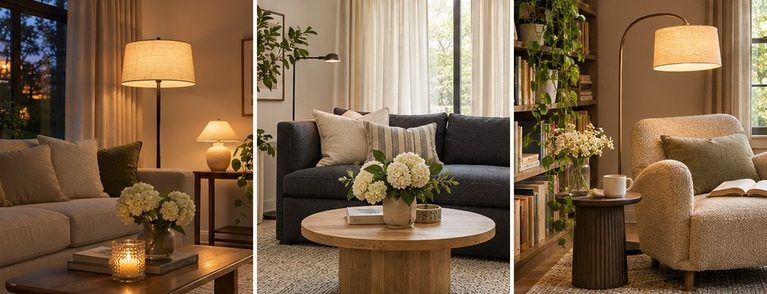
Double Height Living Room
A double height living room can make you fall for a house before you’ve even sat down. Then you move in and wonder why your sofa looks tiny, the TV echoes, and the ceiling light feels miles away. My favorite way to think about these rooms is to start with the view from the sofa. If that spot feels inviting, you can let the architecture do plenty of the showing off.
What Is a Double Height Living Room?
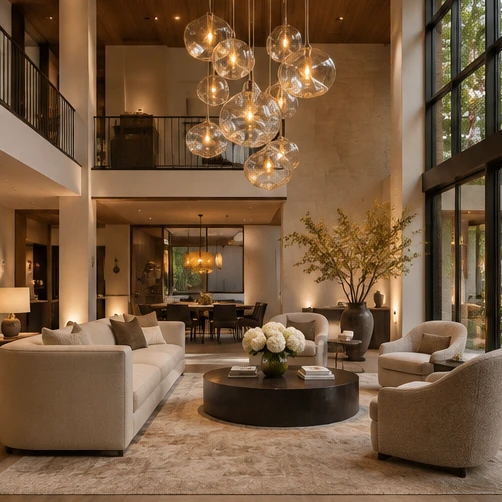
A double height living room is a living space that opens vertically through roughly two stories. You might see a staircase, an upstairs hallway overlooking the sofa, or a continuous wall of windows. A vaulted ceiling can also feel lofty, but its height may come from the shape of the roof. Look at where the ceiling sits relative to the upper floor and you’ll see the difference.
The extra height gives daylight room to spread and makes space for art, glazing, and lighting you’d struggle to fit elsewhere. It also changes how the room feels after dark. A bright window wall can become a vast black rectangle by dinner, and voices may carry upstairs. Factor in the evening view and everyday noise while you’re still deciding where the furniture should go.
Build the Seating Area Around Conversation
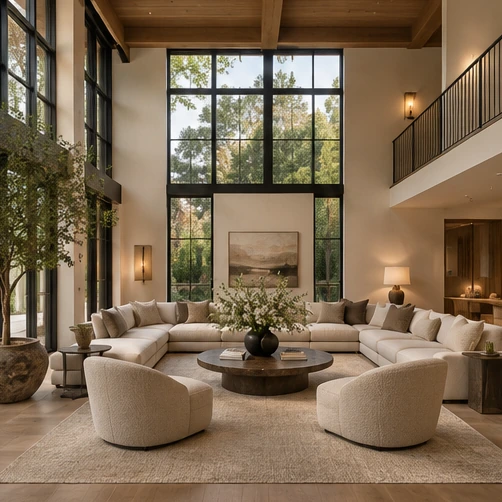
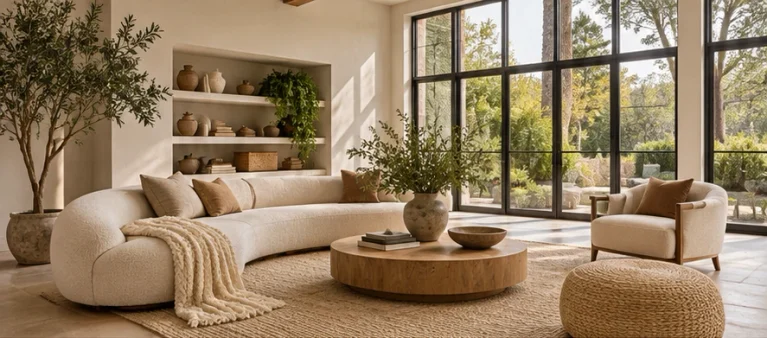
Ever noticed how awkward it feels to call across a wide room from one chair to another? Bring the main seats closer and angle at least one chair toward the sofa. Place the coffee table where people can reach it comfortably, and reserve an open path behind or beside the group. You’ll have a room that works for Sunday coffee even when nobody is looking up.
Start with Three Measurements
- Rug footprint. Mark the front legs of the sofa and chairs with painter’s tape. Choose a rug that can reach all of those points.
- Coffee table gap. Mock up the table with a box and try getting up from the sofa. Around 16 to 18 inches is a useful starting point if the layout allows it.
- Main walkway. Trace the route from the doorway to the stairs or patio. Leave space for two people to pass where the room gets the most traffic.
Give the Tall Wall a Focal Point
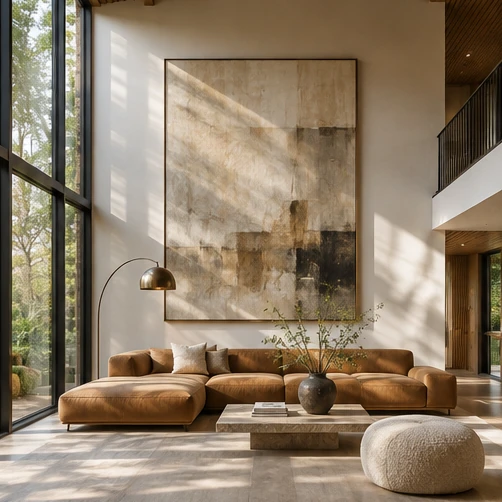
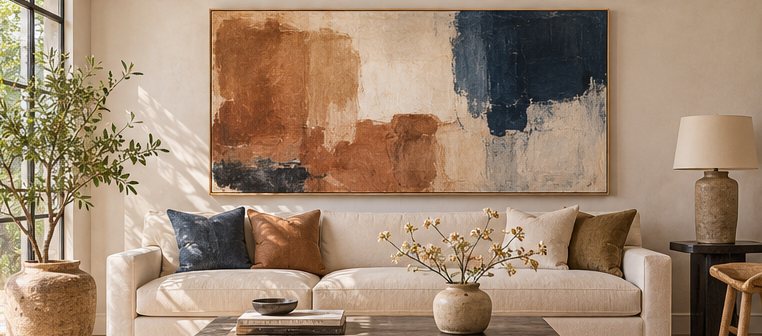
A tall blank wall can make a perfectly good sofa look like it’s waiting for the rest of the furniture to arrive. Try an oversized canvas, a textile wall hanging, or a pair of broad framed works. Think about what you see from the entry and from your favorite chair. For art above a sofa, use the sofa back as your starting reference and check the spacing with a paper outline.
If you already have a collection of smaller pieces, hang them as a tight group. Lay the arrangement out on the floor first so you can see how the frames relate. A single color repeated across the art and the seating area can help tie the wall to the rest of the room. A rust tone in one print might reappear in a cushion, a ceramic bowl, or the rug.
Layer Lighting from the Ceiling to the Sofa
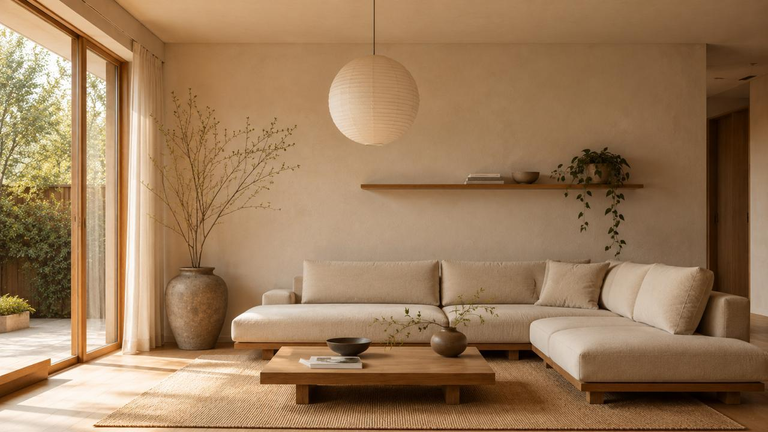
A pendant can look massive in a showroom and surprisingly small when you hang it two stories up. How will it look from the upstairs landing or from the doorway? Use a photo of the room and sketch the fixture at scale before settling on its size and drop. A cluster can add presence in a wide room, while a slim vertical fixture can suit a narrower space.
Light the Parts You Actually Use
- Overhead lighting gives the room a soft base glow and draws attention upward.
- Wall lighting adds depth near art, bookshelves, or a textured wall.
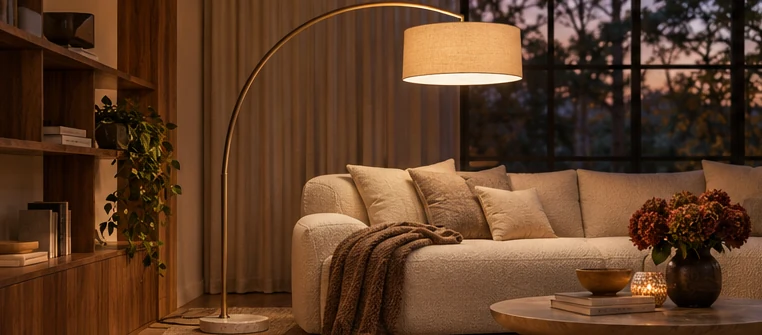
- Floor and table lamps put light exactly where you read, talk, or set down a drink.
FYI, think about bulb changes while you’re choosing a fixture. Ask your installer how you’ll get to it and how it will be controlled. Put the overhead fixture and lamps on separate controls if you want to change the mood through the evening. A dim pendant and a bright reading lamp can happily share the same room.
Dress Two-Story Windows for Day and Night
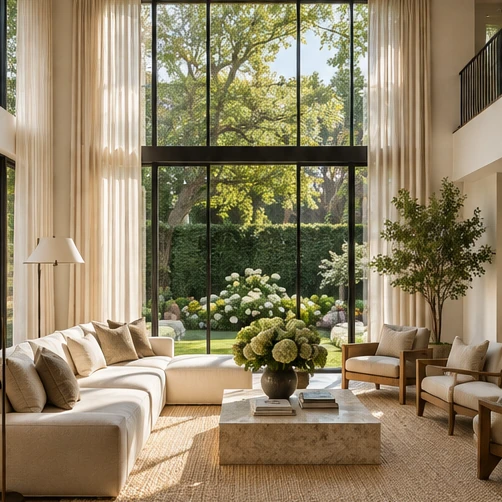
Big windows are beautiful until the afternoon sun hits your TV or the street can see straight into the room at night. Watch where the light falls from breakfast through late afternoon. Then decide which panes need glare control and which need privacy. Lower shades can handle the street-facing panes while the upper glass stays open to the sky.
For a softer look, hang full-length curtains from a track, with enough room at the sides for the fabric to stack when open. If the top windows are out of reach and you need to adjust them often, consider motorized shades. Test fabric samples near the glass in daylight and again under lamps. That pale beige can look surprisingly yellow once the lights come on.
Make the Fireplace an Architectural Feature
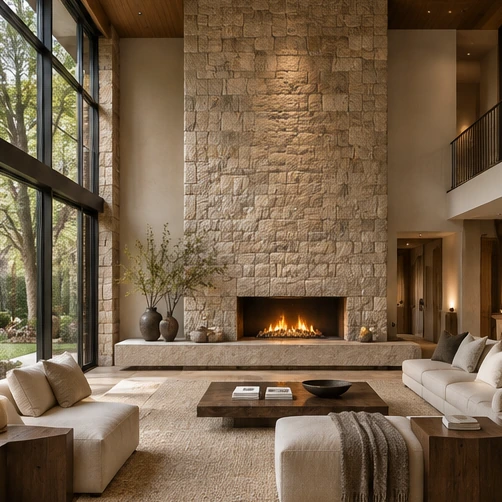
Want the room to have a focal point even when the windows go dark? A full-height fireplace surround carries the eye upward and gives the sofa something to face. Stone brings visible texture, while smooth plaster offers a quieter backdrop. A wide hearth or broad mantel gives the vertical feature some visual weight near the floor.
If you plan to put a television on the same wall, tape out both rectangles before ordering anything. Sit where you usually watch and see how high your eyes need to travel. Moving the screen to a low console on a neighboring wall may give you a more comfortable viewing angle and leave more room for the fireplace finish.
Make a Double Height Living Area Feel Cozy
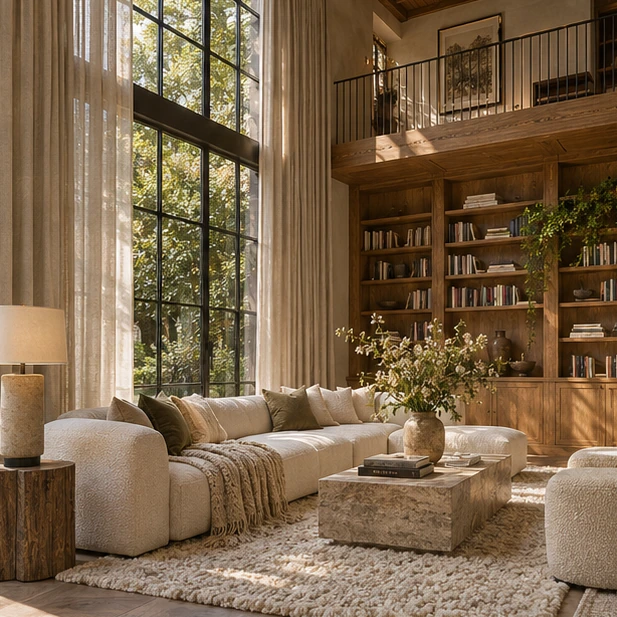
Hard flooring, broad glazing, and bare walls give sound plenty of reflective surfaces. If a chat on the sofa seems to follow you upstairs, start with a thick rug and underlay, upholstered seats, and lined curtains where they make sense. Add the pieces gradually and listen again from the sofa and the landing. For persistent echoes, look at decorative acoustic panels made for sound absorption.
Warmth matters too, especially if the room feels comfortable upstairs while your feet are cold on the sofa. A textured rug and a couple of throws help right where you sit. If you’re already planning a renovation, ask your HVAC installer to assess how air circulates between the lower and upper levels. Think through access and cleaning for any ceiling fan before you pick a location.
Connect a Double Height Dining Room to the Lounge
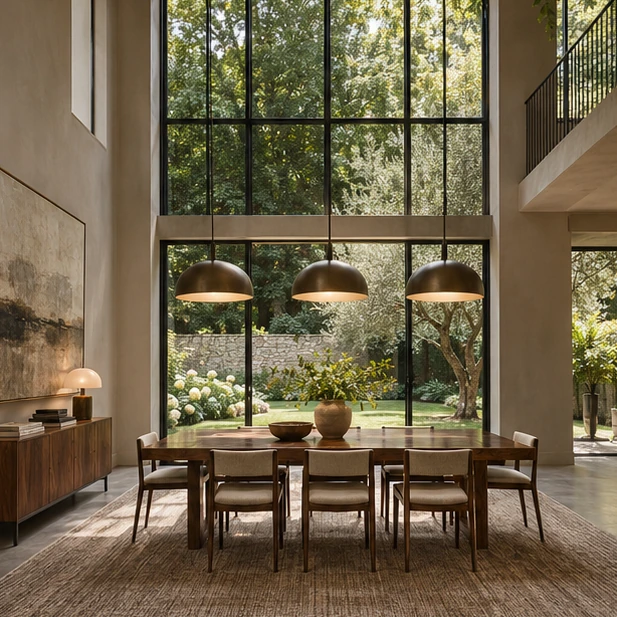
In an open layout, the dining table and sofa each need a place to belong. Hang a pendant or a row of lights over the table and define the lounge with a rug. Repeat one finish across both spaces, such as walnut on the table and walnut on the lounge sideboard. Keep the route between the kitchen and the dining chairs open so carrying a stack of plates feels easy.
A dining nook can work here, too. Try a round table for four if people regularly walk around it, or use a bench along one side when space is tight. Pull the chairs out as you would during dinner and check that someone can still pass behind them.
Style a Small Double Height Living Room
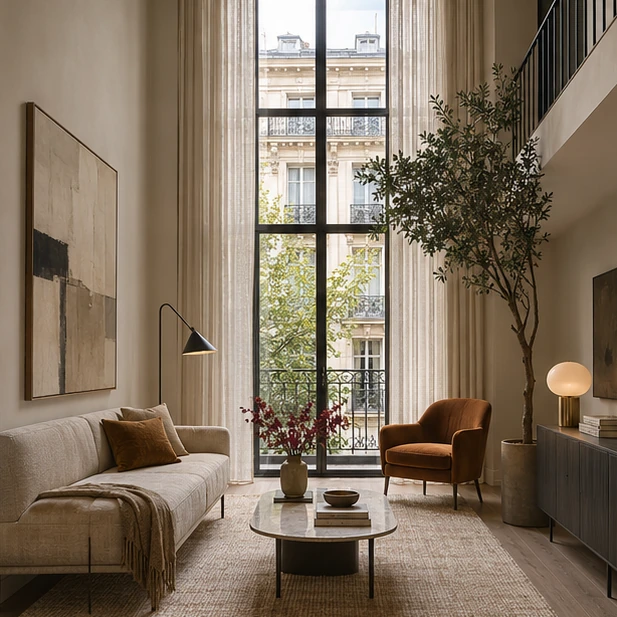
A narrow room gives you less floor space to play with, even when the ceiling seems to go on forever. Try a slim sofa, an oval coffee table, and one accent chair you can turn when guests come over. A round nesting table can move out of the way on busy days. Use curtains or one tall artwork to take advantage of the wall height while keeping the floor clear.
If the room has an upstairs overlook, take one more lap before you buy furniture. From above, you’ll notice the back of the sofa, the rug outline, and the paths between them. A console behind the sofa can make that view feel finished.
Choose Paint for the Light You Have
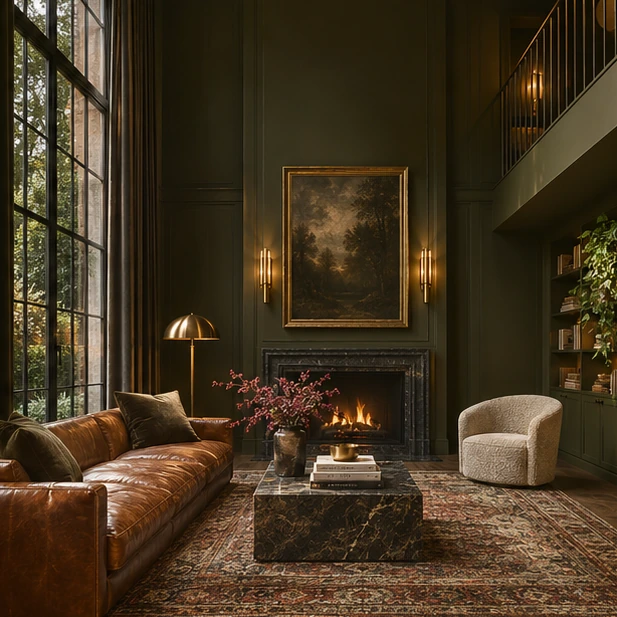
Warm whites can make a sunny room feel airy, while olive or clay can give an evening lounge a cozier mood. IMO, the best test is to put large paint swatches on two walls and live with them for a day. Check how each looks next to the floor and in the shadow near the upper landing. If you want the wall color on the ceiling too, add a sample overhead so you can see how the change in angle affects it.
Bring It All Together
A double height living room feels best when there’s something worth looking at upstairs and a comfortable place to land downstairs. Group the seating, pick a focal point, and plan a mix of lights you’ll actually turn on. Then sit on the sofa at dusk for five minutes and notice what you reach for first. If it’s a lamp, a blanket, or the remote to close the shades, you’ve found your next project.