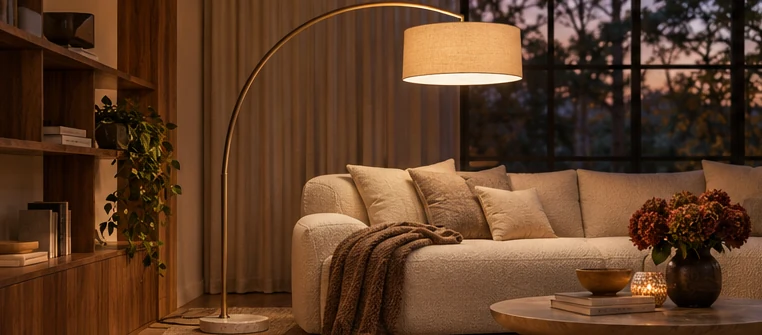
MCM Living Room: 8 Ways to Make Mid-Century Style Feel Warm and Inviting
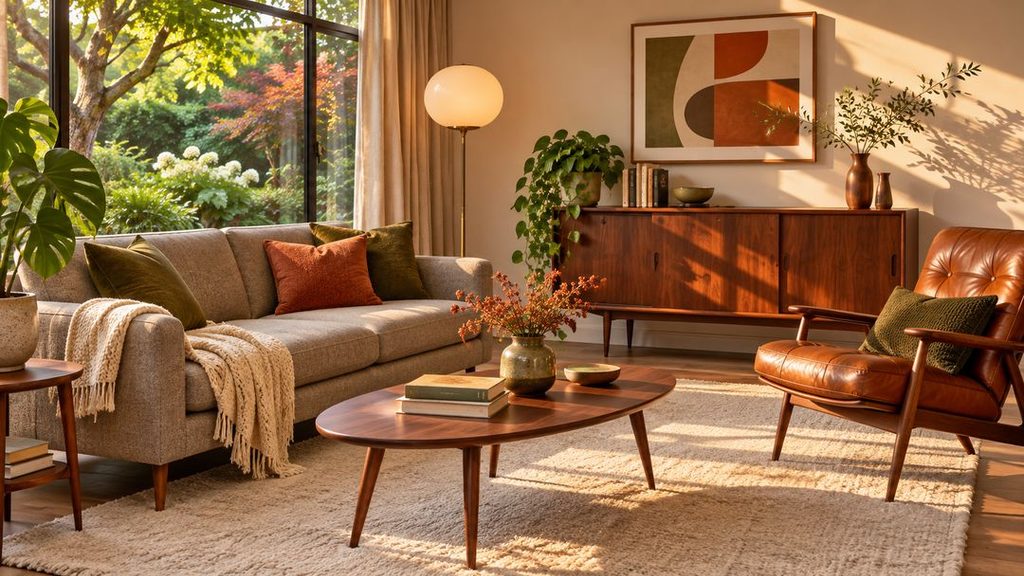
Picture a low grey sofa in the afternoon sun, a walnut coffee table with room for your coffee, and a leather chair angled toward the window. There’s a little olive green in the cushions, a cream rug underfoot, and a globe lamp ready for when the sun goes down. It feels pulled together, and you can still imagine spending a whole Saturday there.
That’s the appeal of a mid-century modern living room. The style’s tapered legs, simple lines, and curved shapes give you a starting point. The warmth comes from the materials, the lighting, and the way you arrange the room around your daily routines. Here are eight ways to get the look, whether you’re furnishing a small flat or refreshing the living room you already have.
1. Give Your Grey Sofa a Warmer Palette
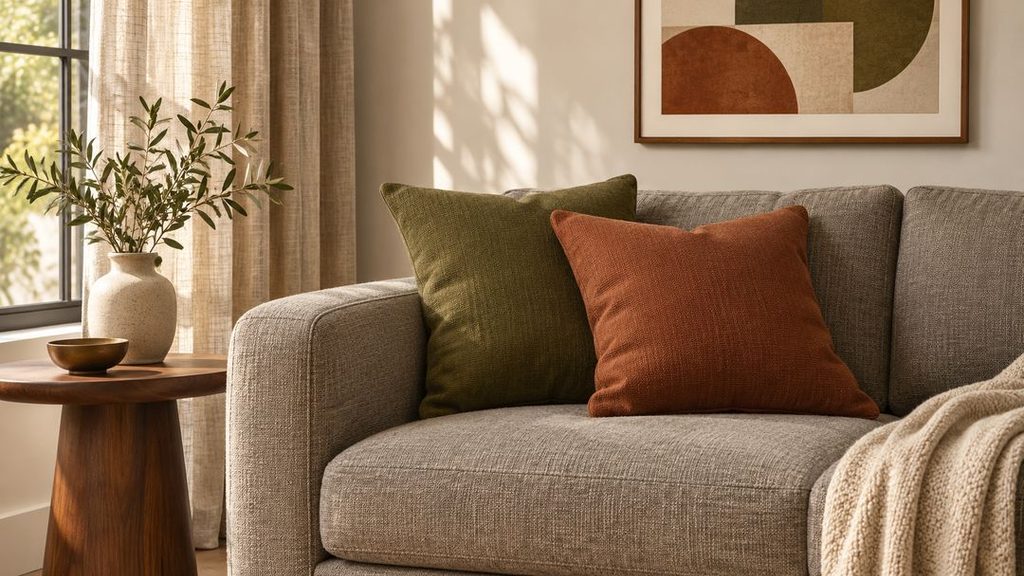
If you’re looking for grey living ideas that still feel cosy, begin with the undertone of your sofa. A warm grey with hints of beige goes well with cream, olive, and terracotta. If yours has a cooler blue cast, try oatmeal textiles and cognac leather to bring in some warmth. Hold samples against the upholstery in daylight and under your lamps. A cushion that looks soft and earthy in the shop can take on a different tone at home.
For an easy combination, put an olive cushion at one end of the sofa and a rust cushion at the other. Add a cream throw if the room needs a lighter touch. You can repeat one of those colours in a framed print or a ceramic bowl across the room.
2. Bring In One Standout Walnut Piece
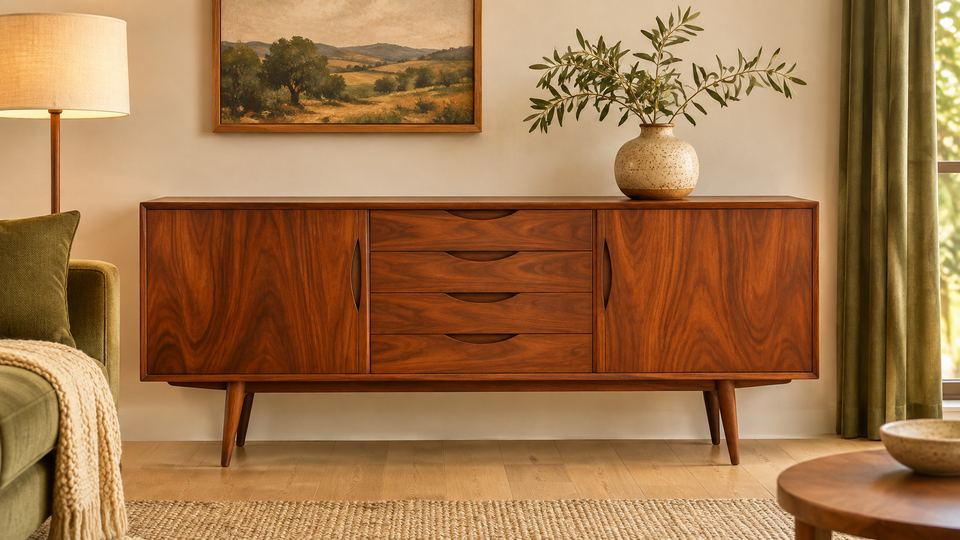
A walnut coffee table or low sideboard can do much of the work in an MCM living room. The wood grain adds detail, and a piece with tapered legs lets you see more of the floor beneath it. Choose the piece you’ll use most. A coffee table gives you a spot for drinks and books, while a sideboard with doors can hide board games, spare cables, and the things you reach for every evening.
If you already have oak flooring or a teak chair, look at the finishes together in daylight. A walnut table can sit happily alongside lighter wood when the tones share a little warmth. You can connect the two with a wood picture frame or a small tray.
3. Soften Straight Lines With a Curved Coffee Table
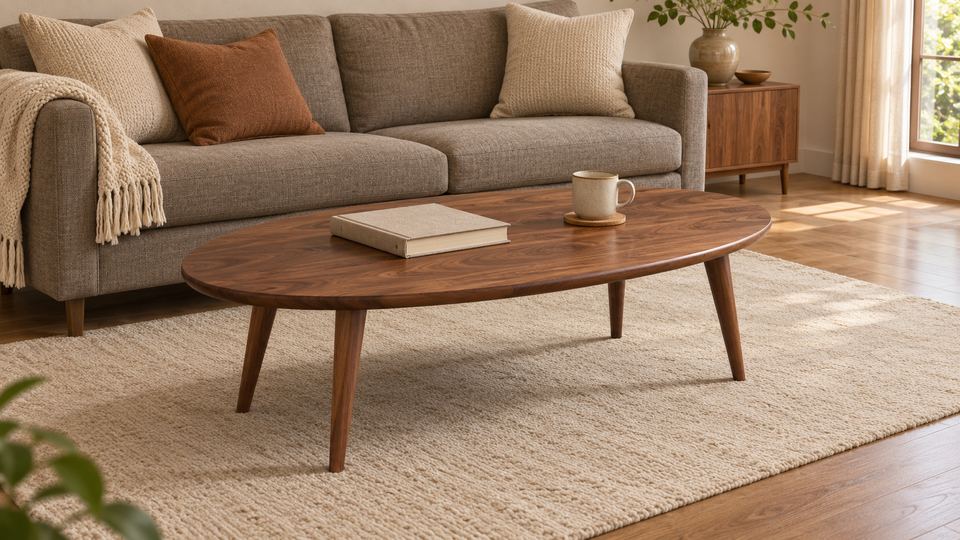
An oval coffee table works well with a long, straight sofa. Its rounded ends soften the seating area and leave fewer corners along the route around it. In a compact room, a round table can sit neatly between a two-seater and an angled chair. If you often eat or work at the table, a slim rectangular one may give you more usable surface.
Start with about 16 to 18 inches between the table and sofa, then sit down and see whether you can reach a mug comfortably. Check the space around the ends, too. If someone has to sidestep every time they cross the room, shift the table or try nesting tables you can pull out when you need them.
4. Keep a Clear Path in a Small Living Room
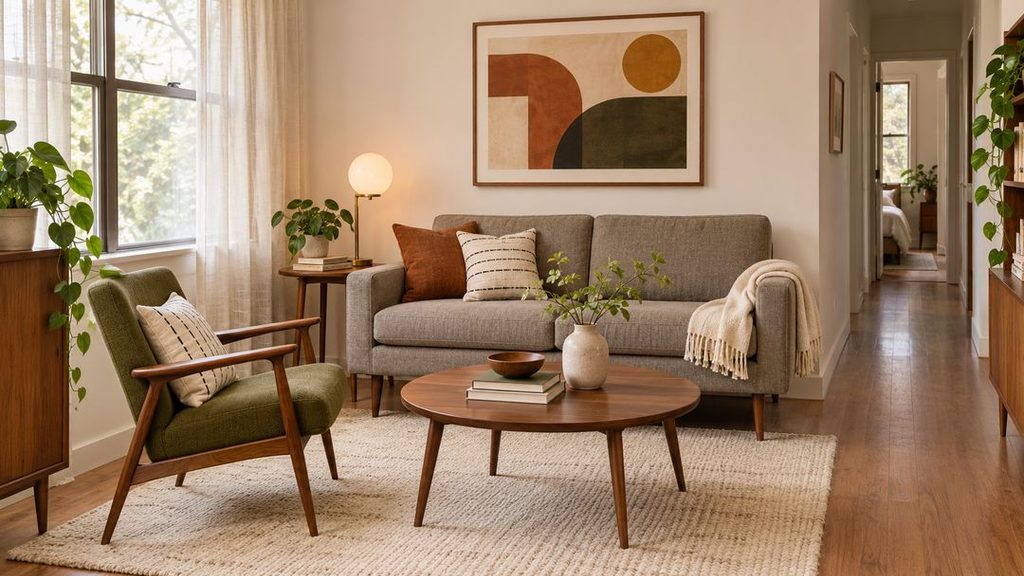
In the photo, the compact grey sofa sits against the wall, the olive chair angles inward, and the route to the hallway stays open. You can borrow that arrangement by placing the sofa first, then moving the chair until it feels close enough for conversation without crowding the path.
Use painter’s tape to mark the footprint of anything you’re considering buying. Include the rear legs of chairs that angle outward and the space a cabinet door needs to swing open. If the coffee table takes up too much room, try a side table next to the sofa arm. You’ll still have somewhere to set a drink, and the middle of the room will be easier to move through.
5. Use an Ivory Rug to Pull the Seats Together
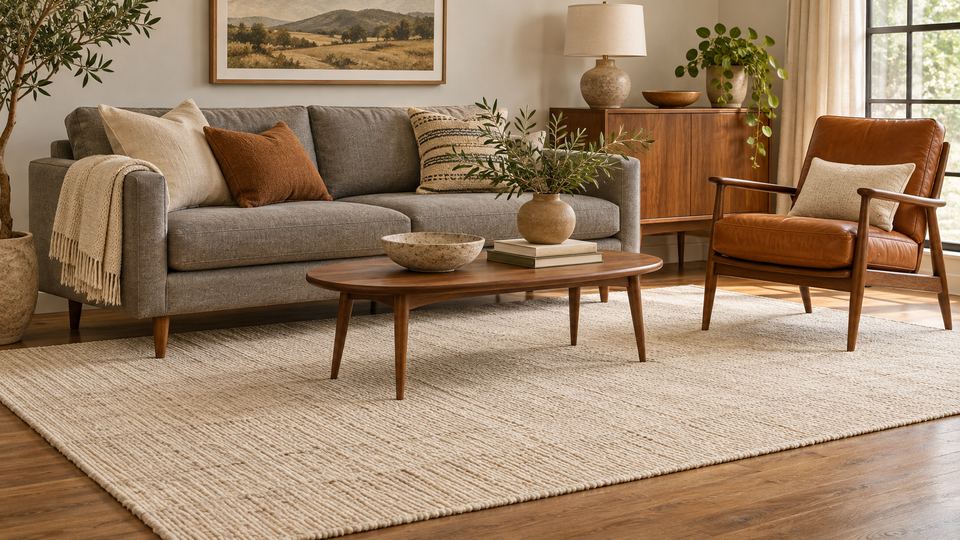
An ivory or oatmeal rug lightens the area around a walnut table and adds a softer texture against smooth wood or leather. A flatweave keeps the look simple, while a textured wool rug gives a neutral room more depth. If you want a pattern, try a small-scale geometric design that picks up a colour from the sofa or artwork.
Arrange the seating before you settle on a rug size. As a starting point, aim to get the front legs of the sofa and chair onto the rug. That helps the seats feel like one group. If a nearby door swings over the rug, check the clearance with the pad in place.
6. Put Lamps Where You Spend Your Evenings
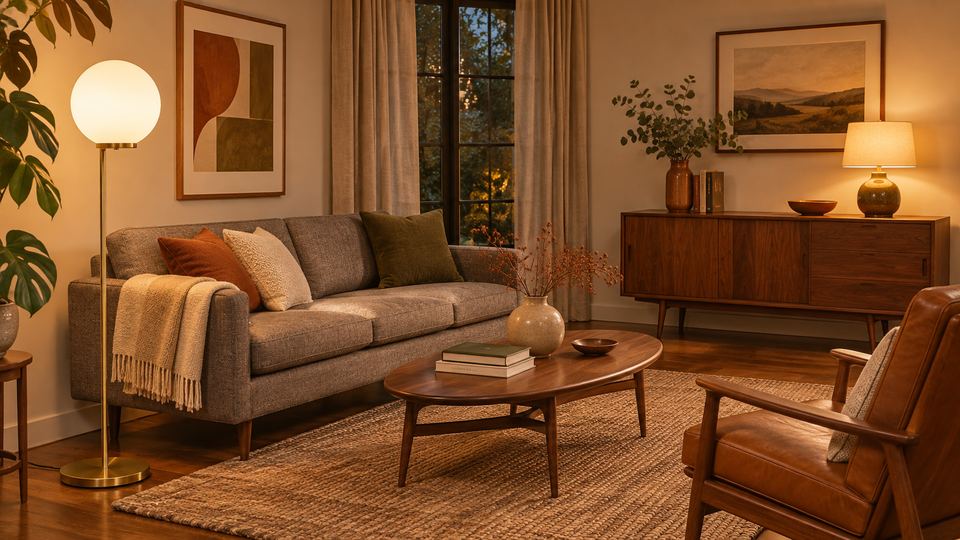
A globe floor lamp gives the room a recognisable mid-century shape, and its soft light makes the sofa corner feel inviting after dark. Across the room, a shaded table lamp on a sideboard can brighten the wall behind it. If your favourite chair doubles as a reading spot, place a lamp beside or just behind it so the light falls on the page.
Warm-white bulbs around 2700 K are a good starting point for evening lamps. Turn them on together and sit where you normally would. If one shines directly into your eyes or reflects off the TV, try moving it to the other side of the chair before adding another fixture.
7. Repeat a Colour in Your Artwork
A geometric print can pull the room together by picking up a colour you’ve already used. In the featured image, the artwork echoes the olive and rust cushions, and its curves pick up the shape of the coffee table. If you prefer landscapes, photography, or textiles, look for the same kind of colour connection.
Before hanging a piece above the sofa or credenza, outline it on the wall with paper. Step back to the doorway and see how it relates to the furniture below. On the credenza itself, a vase, a small stack of books, or a shallow bowl can add interest while leaving room for everyday use.
8. Refresh the Room One Piece at a Time
Start with the piece that already works hardest. If you like your sofa, keep it and try adding a secondhand walnut table or a pair of olive and rust cushions. If you have a timber chair you love, pull it closer to the sofa and give it a lamp of its own. A better layout can change how often you use a corner you used to walk past.
When you’re ready to shop secondhand, check chairs for loose joints and make sure cabinet drawers and doors open smoothly. Measure the doorway and any tight turns before bringing a large piece home. Then live with each change for a few days. The best clue to what the room needs next is what you find yourself reaching for when you sit down.