
Moody Living Room: 10 Cozy Ideas for Rich Color and Warm Light
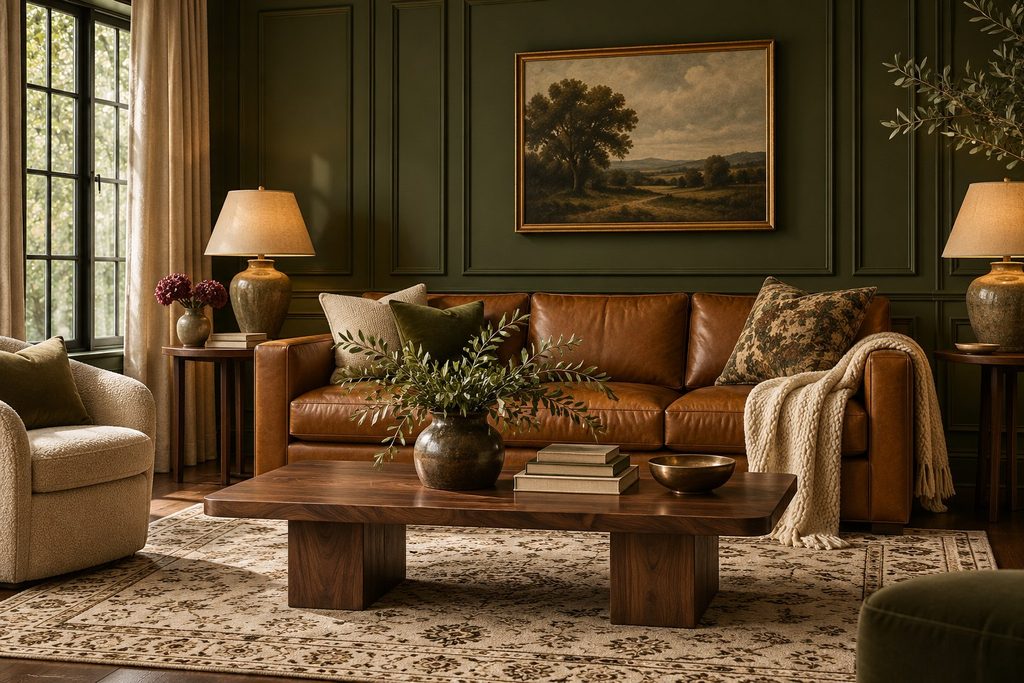
A moody living room makes you want to switch on a lamp, sink into the sofa, and stay a little longer. Deep colors give the space its character, while touches of linen, warm wood, and soft light make it comfortable enough for everyday life. You can get there with a full paint makeover or work with the furniture and finishes you already have.
Start by noticing where you sit most often and how the room feels after sunset. A sofa that looks inviting in daylight may need a lamp nearby in the evening, and a paint color you love online may look cooler beside your own flooring. These ten ideas will help you make choices that suit your space.
1. Pick a Dark Paint Color With the Right Undertone
Olive feels earthy next to honey oak, espresso feels warm beside cream upholstery, and deep navy pairs naturally with aged brass. If your sofa is cool gray, try a smoky blue or a charcoal with a blue undertone. If it’s tan or caramel, look at brown-based greens and muted plum.
Paint large sample boards and move them between the brightest and darkest parts of the room. Check them with your lamps on, too. The version you like at eight in the evening matters just as much as the one you see at noon.
2. Wrap the Trim in the Wall Color
Painting the walls, baseboards, and door trim one deep shade makes a room with lots of architectural breaks feel more cohesive. This works especially well when white trim would outline every doorway and interrupt the view from the sofa. A satin finish on the trim can catch a little light against matte walls, even when both use the same color.
If you want a gentler transition, keep the ceiling a warm off-white. It works well with pale curtains and gives you room to decide later whether to carry the dark shade overhead.
3. Use Lamps to Create Pools of Warm Light
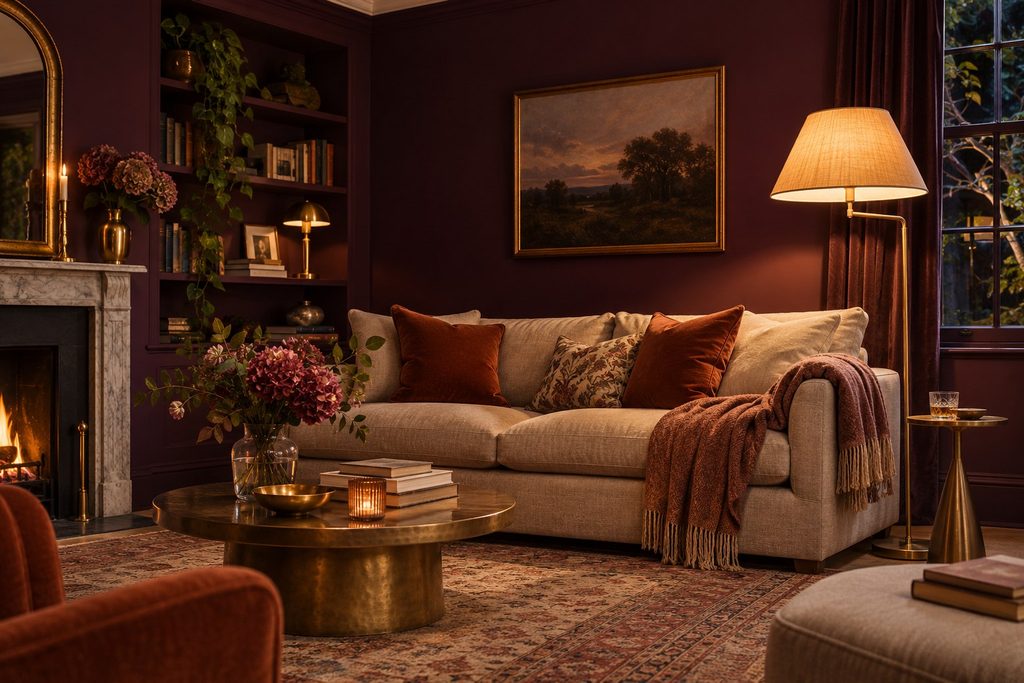
Put a shaded floor lamp beside your reading chair and a table lamp on the far side of the sofa. This gives you two places to sit comfortably after dark and keeps the room from feeling as though all the light comes from one corner. Warm-white bulbs around 2700K are a good starting point for a soft evening glow.
Choose shades that hide the bulb from your seated eye line. If you watch TV in the room, turn it off briefly and check the screen for reflections before settling on a lamp position.
4. Let the Sofa Set the Palette
An oatmeal or cream sofa makes a natural focal point against a dark wall. If you have charcoal upholstery, add a faded rust cushion, a flax-colored throw, or a single patterned pillow that brings both shades together. Cognac leather works particularly well with olive or navy because the warm brown stands out even when the lighting is low.
Repeat one sofa accent elsewhere in the room. A rust cushion can pick up a muted color in the rug, while an oatmeal throw can echo the linen shade on a table lamp.
5. Give a Recessed Wall Alcove a Purpose
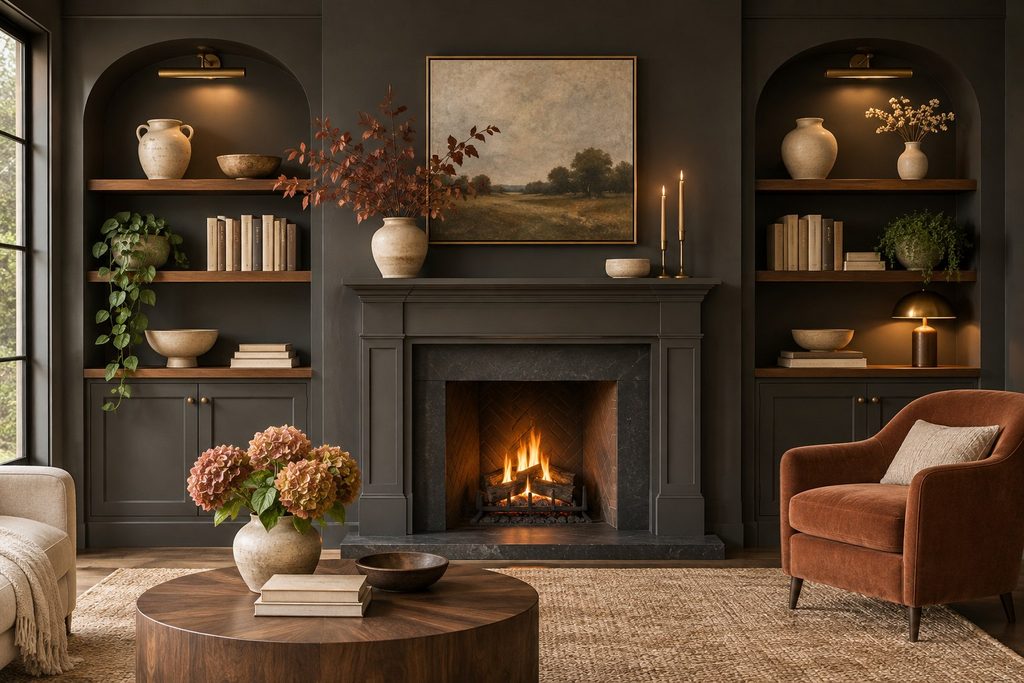
If you’ve been saving wall-alcove-ideas for an awkward fireplace recess, start with what you’d actually use there. Shelves suit a narrow nook where you want to display books and pottery. A wider recess can take a low cabinet that hides remotes, chargers, and spare blankets.
Paint the alcove backing to match the surrounding wall for a continuous look, or line it in walnut for a warmer focal point. Leave some open shelf space around light-colored ceramics so their shapes read clearly from across the room.
6. Layer Textures You Can See in Low Light
Texture gives a dark palette variety even when several pieces share the same color. A velvet cushion catches the glow from a lamp, a woven throw softens a leather chair, and a ribbed ceramic vase looks different from a smooth one on the same shelf.
Start with surfaces you touch every day. Drape a soft throw over the sofa arm, choose a rug that feels comfortable under bare feet, and bring in a wooden tray where you usually set down your tea. A few textures repeated around the room are enough.
7. Anchor the Seating With a Patterned Rug
A faded patterned rug can connect a dark sofa, pale walls, and warm timber in a single piece. Look for a pattern with two colors that already appear in your room. A tobacco-and-cream rug, for example, can pick up the tones of a leather chair and an ivory lampshade.
Size the rug to the whole seating group. Aim to get at least the front legs of the sofa and chairs onto it, then check that the coffee table sits comfortably within reach of the main seats.
8. Soften the Windows With Full-Length Curtains
Full-length curtains soften the edges of dark walls and give the room a finished look. Try oatmeal linen when you want daylight to filter through, or choose a lined fabric in mushroom, olive, or tobacco if you need more privacy at night.
Extend the rod beyond the window frame where there’s room. That gives the fabric somewhere to stack when the curtains are open, keeping more of the glass clear during the day. A hem that just meets the floor looks tidy and is easy to live with.
9. Choose One Piece of Art to Draw the Eye
A landscape with a pale sky or a simple print with a generous cream mat can lift the wall above a dark sofa. One large piece gives the seating area a clear focal point. A pair of smaller prints can work nicely in a narrow space beside a fireplace.
Try the arrangement at seated eye level before hanging it. If the art feels disconnected from the furniture, lower it a little. An antique brass or light oak frame can repeat a finish you already use elsewhere in the room.
10. Start With the Corner You Use Most
If you rent or want to try the look before painting, begin with the corner where you spend most evenings. Pull a chair beside a floor lamp, add a deep olive or burgundy cushion, and set a small dark wood table within reach. A framed print with a dark background can carry the palette upward.
Live with that corner for a few evenings. If you like the atmosphere, repeat one of its colors on the opposite side of the room. From there, you can decide whether the walls, curtains, or a larger rug would make the biggest difference.
A moody living room comes together when the deep colors suit your furniture and the light suits what you do there. Start with the seat you reach for after a long day. Give it a warm lamp, a comfortable texture, and a view you enjoy. Then use those same colors and materials to tie the rest of the room together.