Japandi Living Room: 15 Beautiful Ideas for a Calm, Cozy, and Minimalist Space
A Japandi living room is the perfect combination of Japanese minimalism and Scandinavian comfort. This popular interior design style brings together natural materials, clean lines, warm neutral colors, and thoughtfully selected furniture to create a peaceful and inviting home.
Whether you have a spacious living area or a small apartment, Japandi interior design can help you create a room that feels elegant, functional, and comfortable without unnecessary clutter.
In this guide, we’ll explore 15 beautiful Japandi living room ideas, including furniture choices, color palettes, lighting, textures, and decorating tips to help you achieve this timeless aesthetic.
What Is Japandi Living Room Style?
Japandi is a fusion of Japanese and Scandinavian interior design. Japanese design emphasizes simplicity, balance, and natural beauty, while Scandinavian interiors focus on comfort, functionality, and cozy living.
Together, these styles create a harmonious space that feels both sophisticated and welcoming.
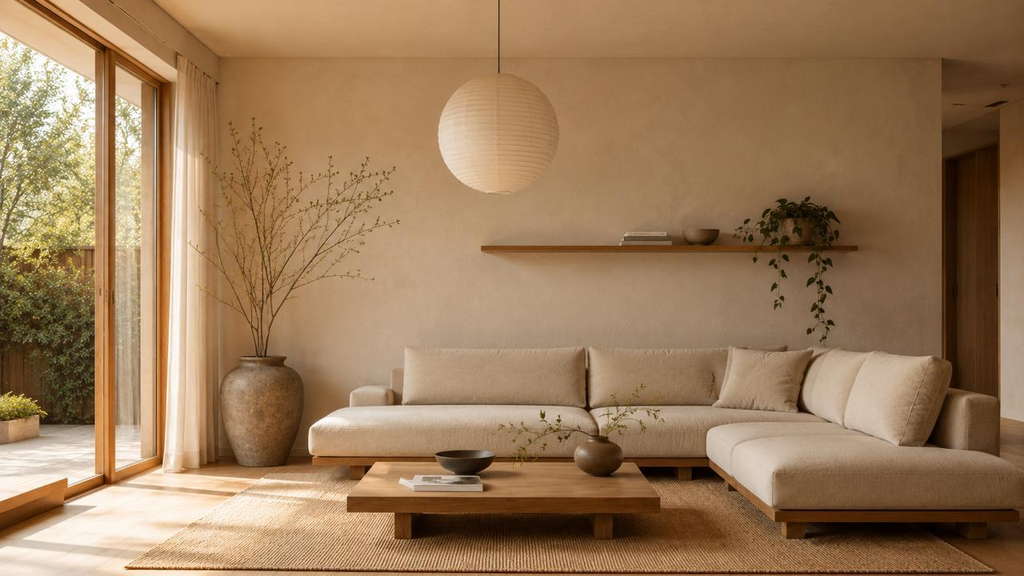
The key characteristics of a Japandi style living room include neutral color palettes, natural wood furniture, minimalist decorations, soft lighting, organic textures, and uncluttered spaces.
The goal is not to create an empty room but to choose meaningful pieces that improve both beauty and everyday comfort.
1. Choose a Warm Neutral Color Palette
A calming color palette is the foundation of every beautiful Japandi living room design.
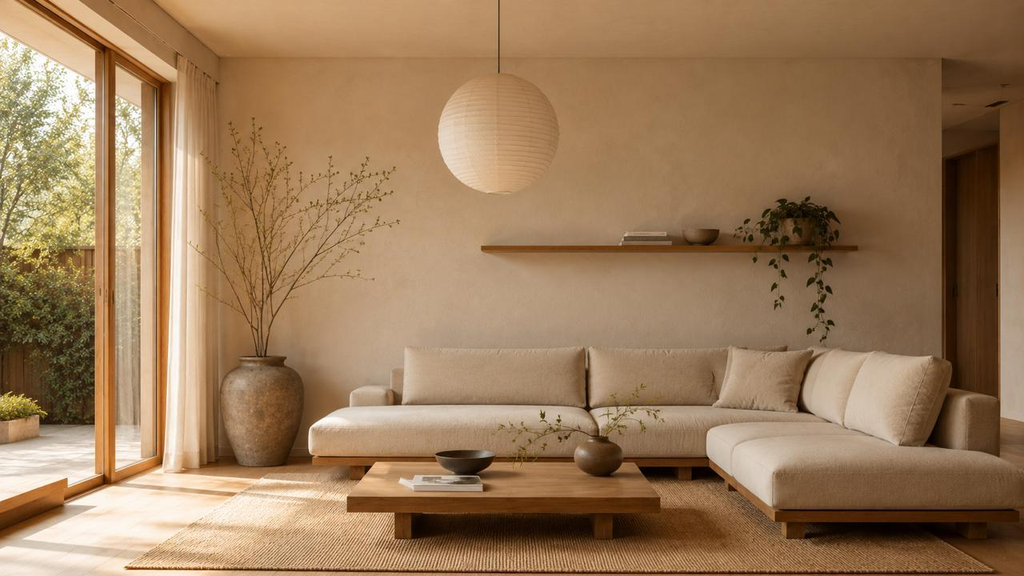
Start with soft shades such as ivory, beige, warm white, taupe, and light gray. These colors create a soothing atmosphere while making your living space appear brighter and more spacious.
You can introduce subtle contrast through charcoal cushions, dark wooden accessories, or earthy brown decorative pieces.
Avoid combining too many bold colors. Instead, focus on a balanced palette that allows natural materials and furniture to stand out.
2. Select Low-Profile Japandi Furniture
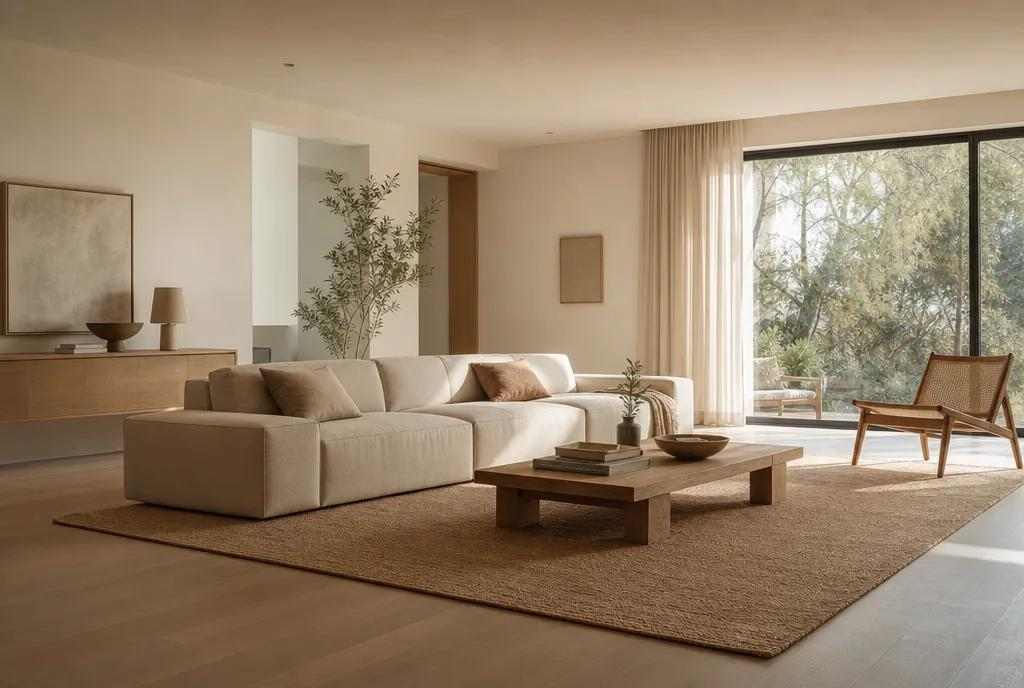
Low-profile furniture is one of the most recognizable features of Japanese-inspired interiors.
Choose a comfortable sofa with a simple silhouette, slim wooden legs, or a low seat height. Pair it with a minimalist coffee table made from oak, walnut, or ash wood.
Furniture with clean lines creates visual harmony and helps the room feel open.
For a small Japandi living room, select compact furniture that provides comfort without overwhelming the available floor space.
3. Incorporate Natural Wood Elements
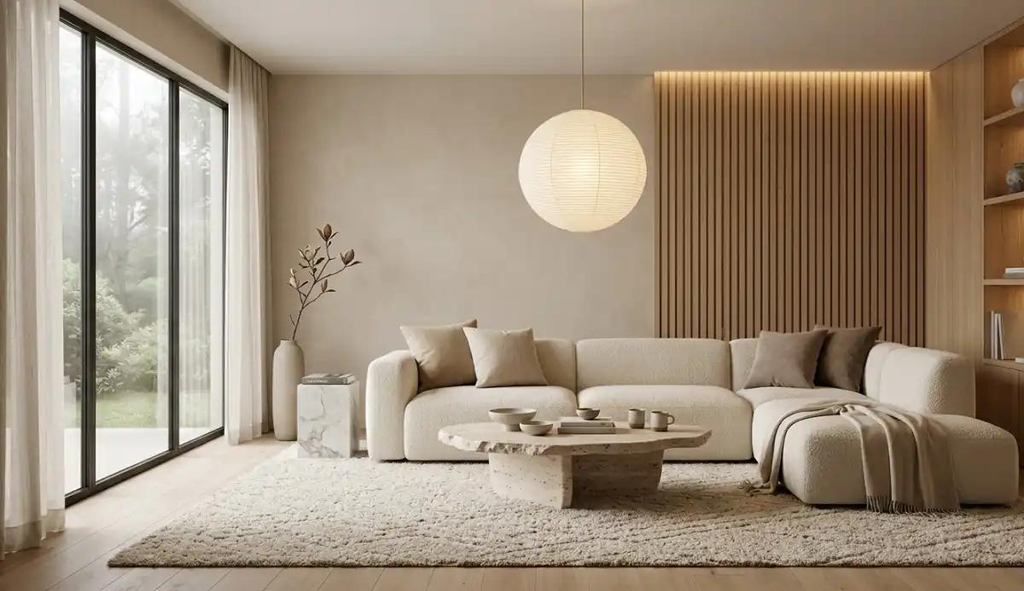
Natural wood adds warmth, texture, and authenticity to Japandi interiors.
Light oak, ash, bamboo, and walnut are excellent choices for coffee tables, shelving, cabinets, and decorative accents.
You can also introduce wooden wall panels or floating shelves to add architectural interest.
Combining lighter and darker wood tones can create depth, but keep the overall appearance cohesive.
The natural grain of wood adds character without requiring excessive decoration.
4. Create a Cozy Japandi Living Room with Soft Textures
Minimalist interiors should never feel cold or uncomfortable.
Add warmth through linen cushions, wool blankets, cotton upholstery, and textured area rugs.
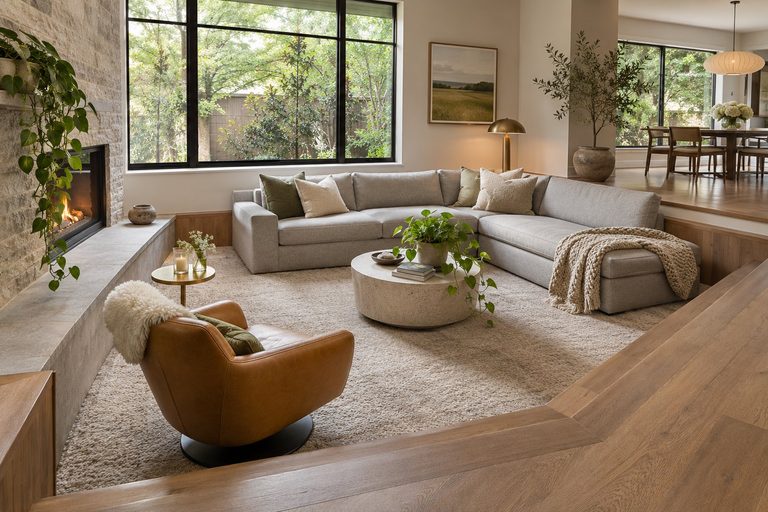
A soft cream rug beneath your coffee table can instantly make the seating area feel more inviting.
Choose fabrics in muted colors and avoid overly decorative patterns.
These simple additions introduce the Scandinavian concept of hygge, which emphasizes warmth, relaxation, and everyday comfort.
5. Use Minimalist Japandi Wall Decor
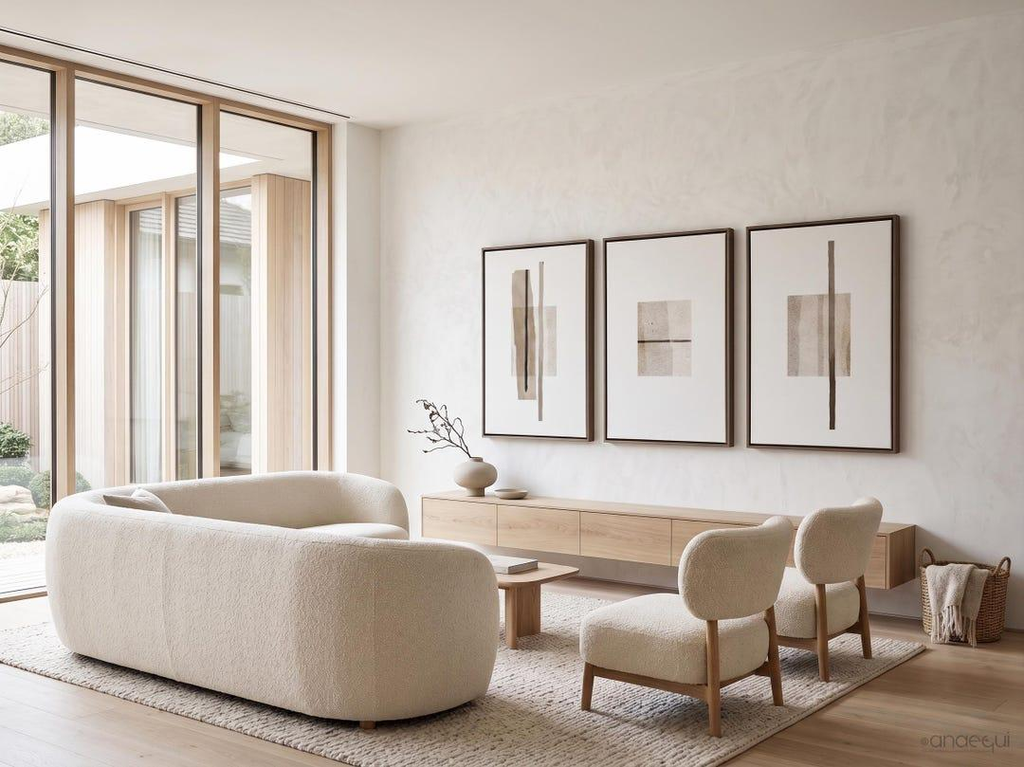
Wall decorations should complement the room rather than dominate it.
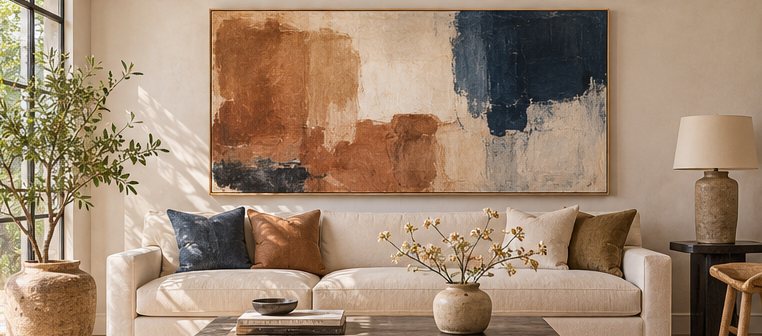
Consider a large abstract painting, Japanese ink-inspired artwork, or a framed botanical print.
Neutral artwork featuring organic shapes and earthy colors works especially well.
Instead of filling every wall, display one or two carefully selected pieces.
Leaving some walls empty creates breathing room and reinforces the peaceful Japandi aesthetic.
6. Bring Nature Indoors with Greenery
Indoor plants are an easy way to introduce life and freshness into a minimalist living room.
Choose plants with elegant shapes, such as a fiddle-leaf fig, olive tree, snake plant, or bonsai.
Place them in ceramic, stone, or woven planters that match your neutral color palette.
A single statement plant beside the sofa can provide visual interest without making the room feel crowded.
Natural greenery also creates a beautiful connection between indoor living spaces and the outdoors.
7. Install Soft and Warm Japandi Lighting
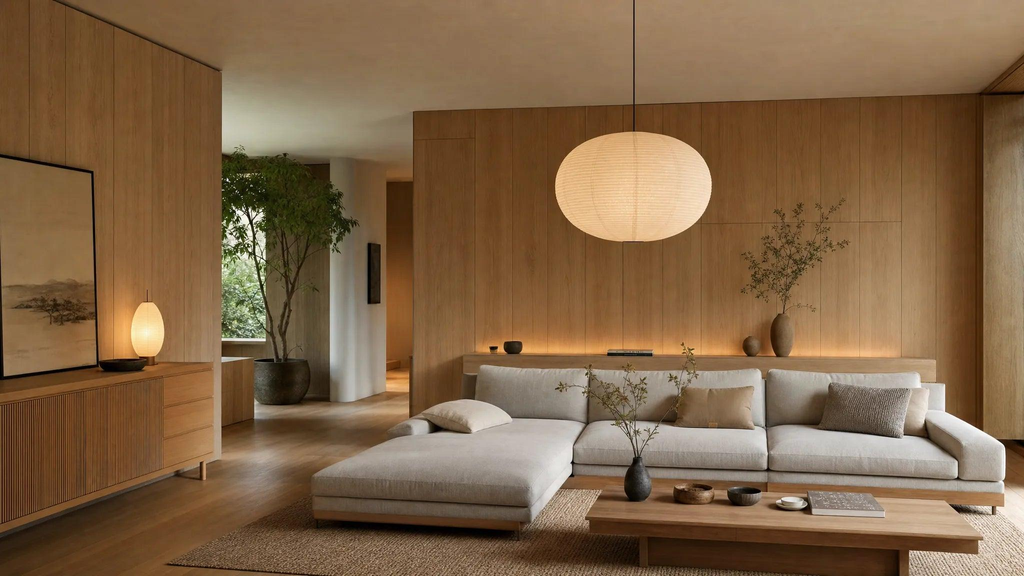
Lighting plays an important role in creating a peaceful Japandi atmosphere.
Maximize natural daylight with sheer curtains and unobstructed windows.
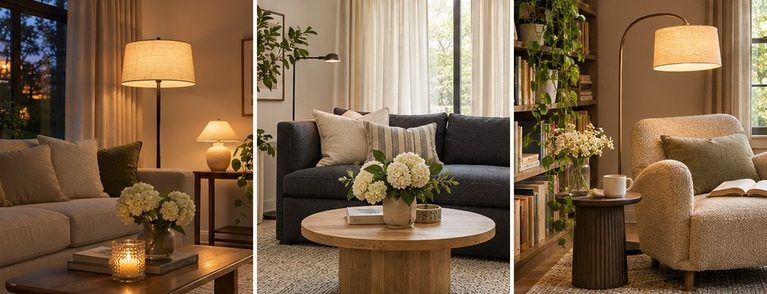
For evening lighting, choose warm-toned bulbs, paper lantern pendants, wooden floor lamps, or minimalist table lamps.
Layer different light sources rather than relying entirely on a bright ceiling fixture.
Soft lighting highlights natural textures and makes your living room feel comfortable after sunset.
8. Add a Japandi Coffee Table as a Focal Point
A thoughtfully chosen coffee table can become the centerpiece of your living room.
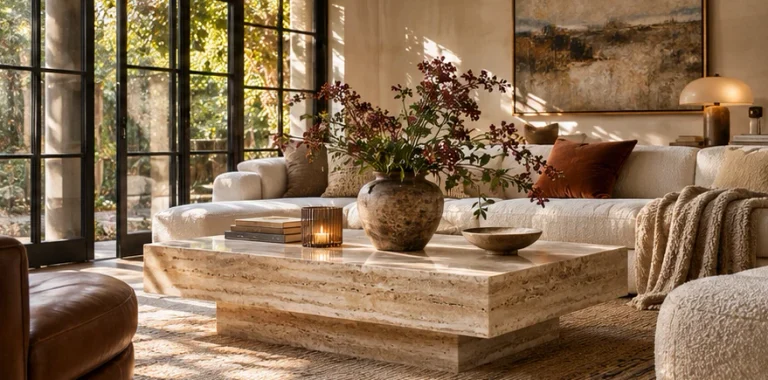
Look for rounded wooden tables, low rectangular designs, or simple stone surfaces.
Decorate the table with a ceramic vase, a small stack of books, or a handmade bowl.
Avoid covering the entire surface with accessories.
A simple arrangement allows the craftsmanship and natural materials to remain the focus.
9. Design a Small Japandi Living Room
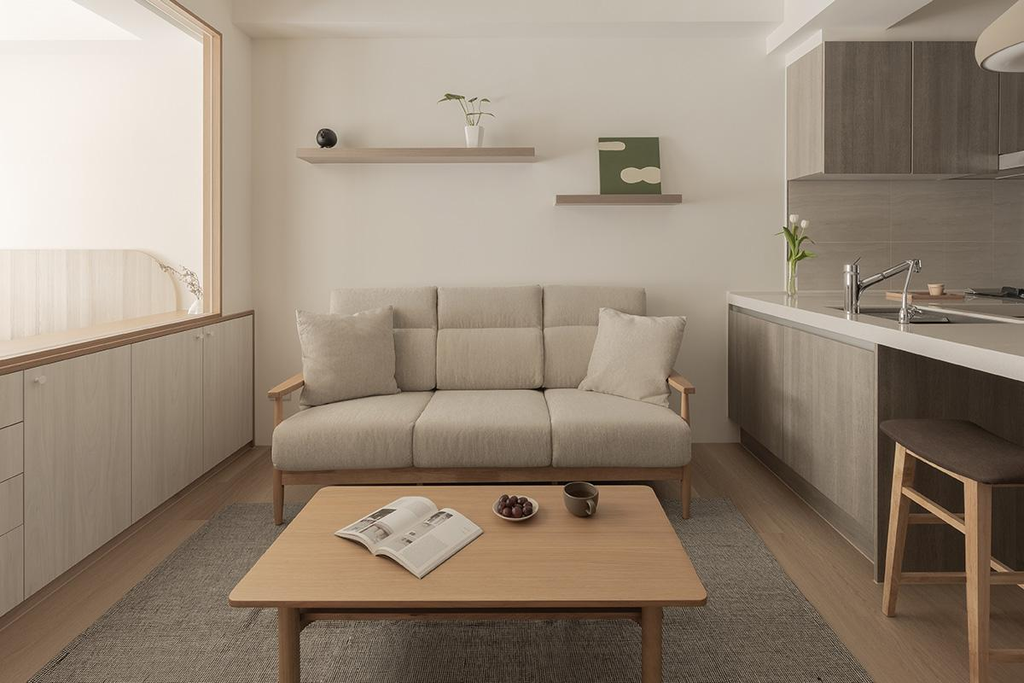
Japandi design works particularly well in small apartments because it prioritizes simplicity and functionality.
Choose a compact sofa, nesting tables, and wall-mounted storage to maximize usable space.
Light-colored walls and furniture help reflect natural light, making the room feel larger.
Keep pathways clear and avoid bulky decorative pieces.
A carefully arranged small living room can feel surprisingly spacious when every item has a purpose.
10. Introduce Wabi-Sabi Decorative Elements
Wabi-sabi is a Japanese aesthetic that appreciates simplicity, natural aging, and imperfection.
Incorporate handmade pottery, uneven ceramic bowls, textured plaster finishes, or weathered wooden accessories.
These elements bring personality and authenticity to your Japandi living room.
Rather than purchasing perfectly matching decorations, select pieces with subtle variations in shape and texture.
This creates a relaxed environment that feels naturally beautiful.
11. Choose Functional and Hidden Storage
Clutter can quickly disrupt the calming appearance of a minimalist living room.
Choose furniture that combines beauty with practical storage.
Wooden sideboards, closed cabinets, storage ottomans, and floating shelves can help organize everyday essentials.
Keep frequently used items accessible while storing unnecessary objects out of sight.
A tidy environment allows the room’s natural textures and architectural details to shine.
12. Layer Neutral Rugs and Natural Fabrics
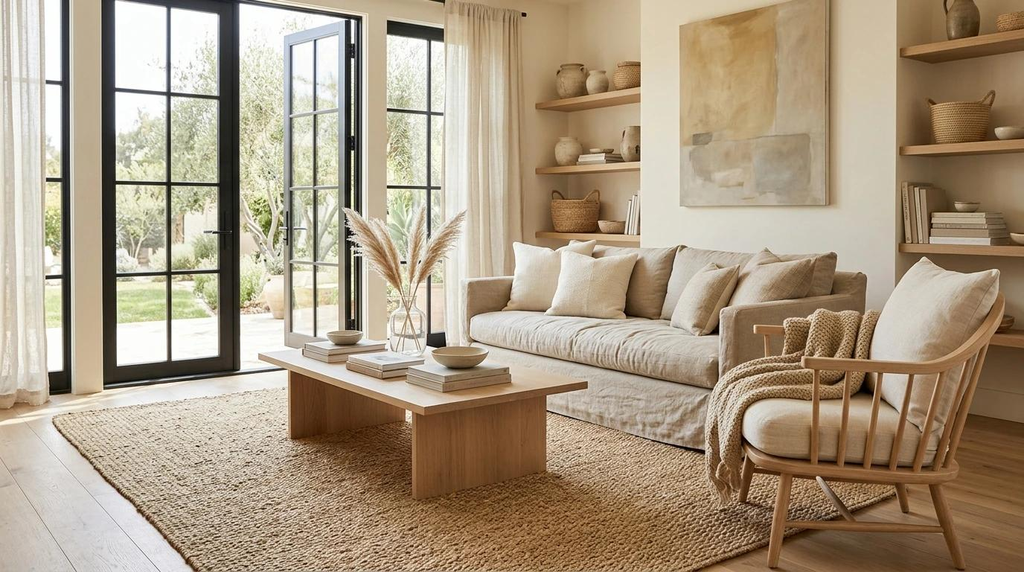
Rugs help define the seating area while adding softness beneath your feet.
Choose wool, jute, cotton, or other natural-looking fibers in neutral shades.
A textured beige rug works beautifully with wooden furniture and cream upholstery.
For additional comfort, layer a smaller soft rug over a larger natural-fiber rug.
Keep patterns subtle so the flooring complements the overall design.
13. Mix Scandinavian Comfort with Japanese Simplicity
The most successful Japandi interiors balance the strengths of both design traditions.
Scandinavian elements introduce cozy seating, practical furniture, and soft textiles.
Japanese influences contribute low furniture, natural materials, and an appreciation for open space.
For example, combine a comfortable Scandinavian sofa with a Japanese-inspired wooden coffee table.
The result is a stylish living room that feels warm, intentional, and easy to live in.
14. Create a Japandi Accent Wall
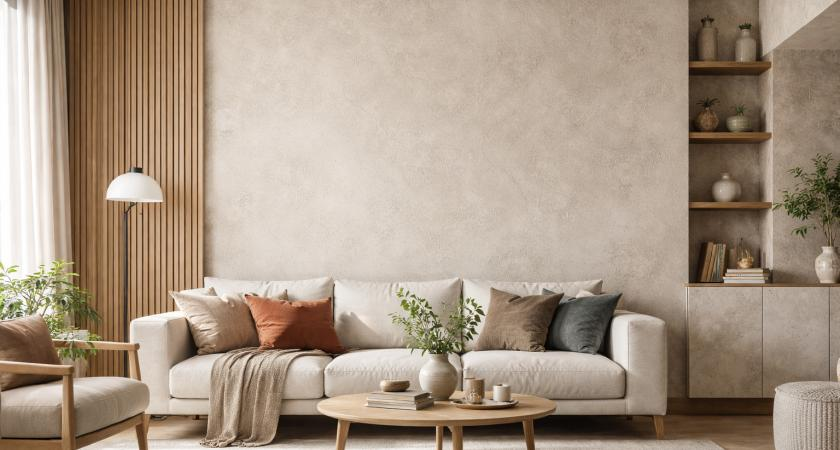
An accent wall can introduce visual depth without overwhelming your minimalist design.
Consider limewash paint, textured plaster, subtle wood slats, or warm beige wall finishes.
These materials create interest through texture rather than bold patterns.
Position your accent wall behind the sofa or entertainment unit to establish a natural focal point.
Keep surrounding decorations minimal to maintain a balanced appearance.
15. Finish with Thoughtful Minimalist Accessories
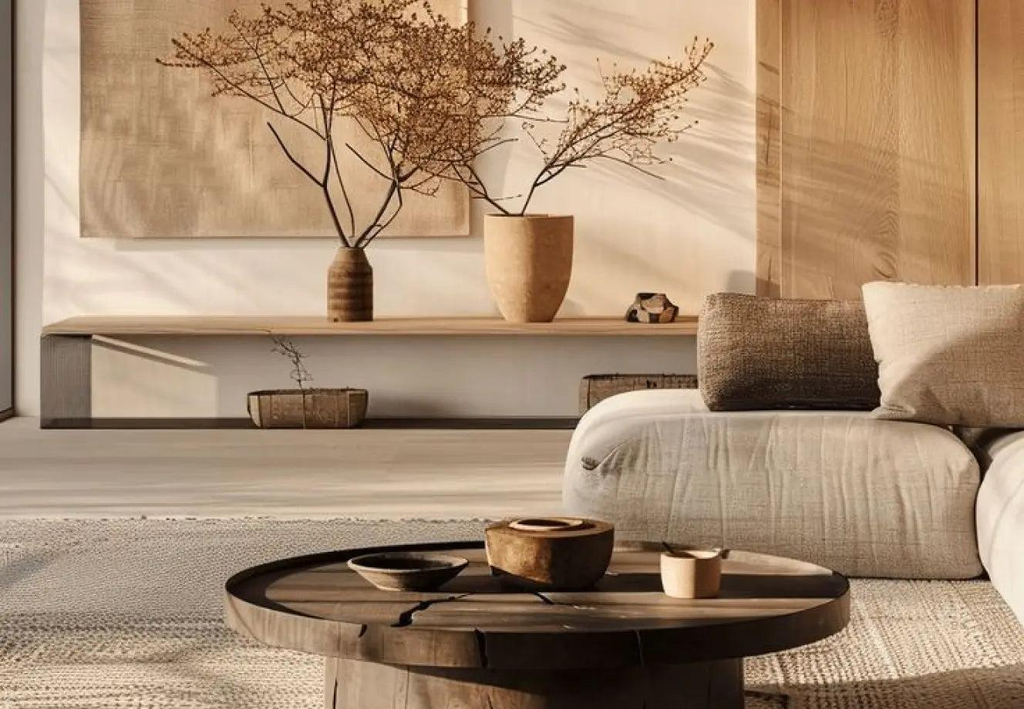
The final step is selecting a few meaningful accessories that enhance your living room.
Consider handmade ceramic vases, sculptural wooden objects, woven baskets, or dried branches.
Arrange decorations in small groups while leaving open surfaces around them.
Choose quality over quantity and prioritize objects that reflect your personal taste.
A well-designed Japandi living room should feel lived-in, comfortable, and visually peaceful.
Frequently Asked Questions About Japandi Living Rooms
What colors are best for a Japandi living room?
Warm white, beige, taupe, cream, soft gray, and earthy brown are excellent choices. Muted green and charcoal can provide subtle contrast.
Is Japandi style suitable for small living rooms?
Yes. Its emphasis on compact furniture, practical storage, neutral colors, and uncluttered layouts makes it particularly suitable for smaller spaces.
How can I decorate a Japandi living room on a budget?
Start by decluttering, rearranging existing furniture, adding neutral cushion covers, and introducing affordable natural accessories. You do not need to replace everything.
What is the difference between Japandi and Scandinavian design?
Scandinavian design generally emphasizes cozy functionality and bright interiors, while Japandi combines that comfort with Japanese simplicity, restrained decoration, and natural imperfections.
Final Thoughts
Creating a beautiful Japandi living room is about achieving balance between simplicity, comfort, and natural beauty.
By combining warm neutral colors, low-profile furniture, organic textures, soft lighting, and meaningful decorations, you can transform almost any living space into a calming retreat.
Whether you prefer modern Japandi living room ideas or a cozy Japanese Scandinavian aesthetic, remember that thoughtful design matters more than expensive furniture.
Start with a few simple changes and gradually create a space that feels peaceful, welcoming, and uniquely yours.
Love these Japandi living room ideas? Save this guide to your Pinterest home decor board for future inspiration, and explore more minimalist living room decorating ideas to create your dream home.